






Countries laser-focused on attracting the next wave of investment may soon find that tax breaks and affordable labor may not be enough to keep investors engaged. The new criteria for raising funds may very well be in the energy space, and more specifically, which country has clean, stable, and scalable energy, with credible governance to ensure that the landscape is ready for future industries.
Key Point
For Thailand, this makes the latest sweeping energy policy reforms more significant than the passing headlines about 3-baht tariffs or short-term cost reductions. The real question here is the future-forward industries at stake, those fuelling Thailand’s regional ambitions.
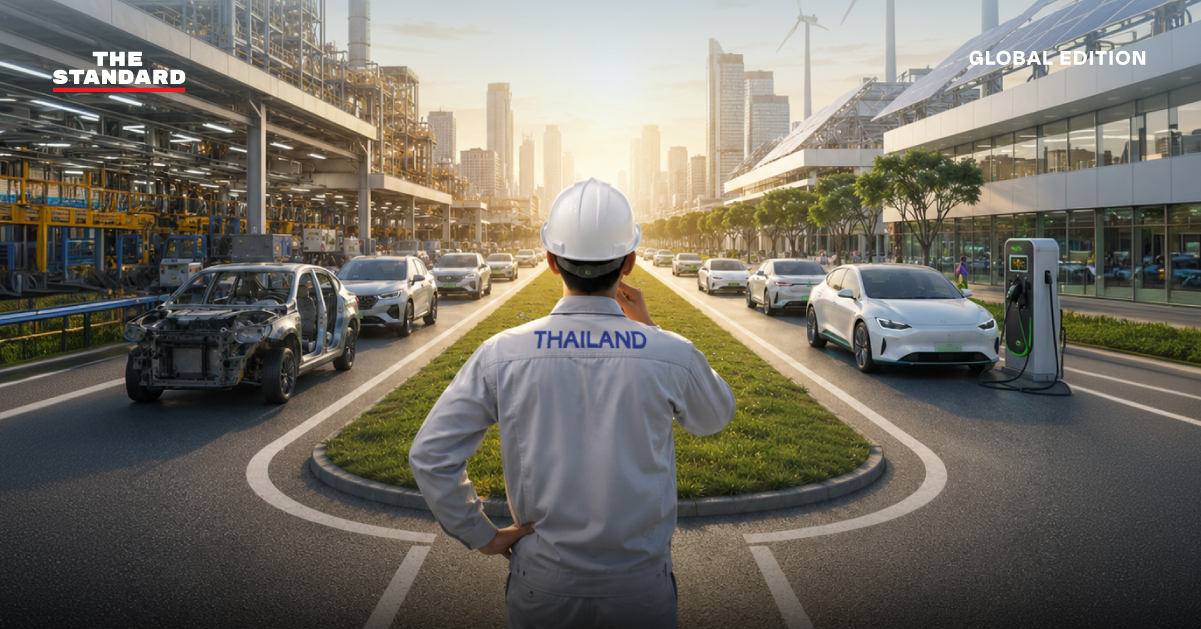
Is Thailand’s power infrastructure ready to support AI advancement, data center investments, cloud computing, EVs, and smart manufacturing? These are not just buzzwords but key components in the green supply chain that’s fuelling growth in the new global economy.
If Thailand rises to the occasion, the country can turn energy into a competitive advantage. If not, then energy risks becoming a bottleneck in the country’s future-forward ambitions.
Tariff Reform: More Than a Short-Term Solution
In an exclusive interview with THE STANDARD, the Minister of Energy outlined a six-part electricity reform agenda for Thailand. These include reclassifying data centers as a distinct consumer category, opening a Direct PPA market, and renegotiating the longstanding Adder contract.
The Minister’s target is to reduce electricity costs by 30-50 per unit, but the bigger picture here is how the government is attempting to reallocate costs across the entire electricity value chain among households, state utilities, power producers, and investors. It’s not merely about reducing costs for the end consumer; the goal is an ambitious structural overhaul.
If reform is executed with policy discipline, it could deliver meaningful structural savings.
The Data Center Opportunity
Data Centers have dominated investment and digitization talks in Thailand, essentially becoming the symbol of the country’s digital ambitions. Investment and demand for data centers across the country is read as receipts of global interest and of Thailand’s AI aspirations.
From an energy standpoint, though, they draw significant energy from the country, and without clarification on who should bear the additional systems cost, it could reshape the entire economics of the national grid.
The Energy Minister noted that capacity reservations from data centres have reached nearly 30,000 MW, prompting regulatory action. The proposed approach is to establish data centers as its own consumer category, one that pays on true costs and meets clearly defined clean energy requirements from the state.
There’s a significant shift here. It’s telling of how attracting investments will no longer be contingent on subsidies alone, but also on how each investment will draw on a country’s natural resources and how much value it creates.
From now on, companies looking to invest in Thailand will need to take into account electricity costs and access to clean power, in addition to the usual variables of labor and taxes.
Direct PPA: The Path to Clean Energy
Thailand’s Direct PPA is arguably the most important mechanism that ties it all together. Under the new Direct PPA agreement, Thailand would open the market for private parties to buy and sell clean electricity directly, thereby contributing to a structural shift in the country’s energy market.
Thailand’s traditional power purchasing model looks a bit different. Private power producers sell to state utilities (EGAT, MEA, PEA), which then distribute to end users, with the state in the middle of every transaction. A Direct PPA would cut the middleman altogether.
Clean energy is no longer just a buzzword for multinational corporations but a supply chain requirement driven by net-zero commitments and clients across key markets. If Thailand is unable to compete and offer clean electricity at a competitive price, companies will simply start looking elsewhere.
Whether the Direct PPA delivers in practice comes down to one number: the wheeling charge. All eyes will be on this.
Solar Rooftop and the LNG Problem
Thailand’s 500 MW solar rooftop plan is part of a structural overhaul in which citizens transition from electricity purchasers to potential producers, sellers, and managers of their own energy. With proper execution, it opens new markets across solar installation, battery storage, smart inverters, and energy management. The challenge is that real beneficiaries will likely be upper- to middle-class homeowners with rooftops and capital to invest upfront, making accessible financing, loan guarantees, and transparent metering the difference between a broadly shared transition and a subsidy for those who need it.
But this plays out against a deeper constraint: Thailand’s dependence on LNG and natural gas keeps electricity costs tethered to global energy prices and geopolitical volatility. Tariff policies may ease short-term pain, but the real questions, how the government redesigns the underlying cost structure and whether reforms disrupt existing contracts, matter far more to long-term investors than any single tariff adjustment.
Adder & SMR: The Litmus Test For Long-Term Confidence
It’s important to understand both terms before diving into their significance.
Adder contracts are legacy power purchase agreements signed under Thailand’s first renewable energy incentive scheme, launched in 2007 and discontinued in 2014. The scheme offered green electricity producers a premium on top of the wholesale rate, an add-on that could extend for up to 10 years. Those who signed before the cutoff were grandfathered in and continue to collect those rates today.
Small Modular Reactors (SMRs) are a new generation of nuclear power plants that are smaller and cheaper to build than conventional plants and are deployed in stages.
The government now wishes to renegotiate the Adder terms and reduce the structural burden of these legacy costs. Meanwhile, Thailand’s commitment to SMR shows the country is leaning towards clean power, but there are cost and legislation constraints.
Both are starkly different but highlight the country’s long-term commitment to walking the energy talk.
Thailand’s Energy Landscape: Opportunities & Risks
A quick scan across all the variables highlights the opportunities and risks to Thailand’s energy landscape. There are tangible opportunities in clean energy, data centers, solar roofs, and energy storage. Against this, there are real risks attached. Regulatory ambiguity, energy costs tied to LNG, and delays to the new PDP agreement pose real risks to Thailand’s future-forward industrial vision.
Energy is not just a utility now, but an infrastructure requirement, and it conveys Thailand’s commitment and readiness for future economic growth.
Missteps in reform will potentially become Thailand’s bottleneck that compromises its place in the new global order, one where clean energy and renewables are the new strategic assets.
THE STANDARD Global Edition is produced in collaboration with Bitesize Bangkok
Key Takeaway:
- As Thailand readies to act on its renewed global ambitions and pursue reforms across critical sectors such as energy, it highlights how the new standard for fundraising globally is tied to clean energy and credible governance.
- The Ministry of Energy has outlined six pillars related to the structural reform of Thailand’s energy policy, touching on segments such as Direct PPA and reconfiguration of outdated Adder terms.
- Is Thailand’s power infrastructure ready to support AI advancement, data center investments, cloud computing, EVs, and smart manufacturing? These are not just buzzwords but key components in the green supply chain that’s fuelling growth in the new global economy.
- Meanwhile, Thailand’s longstanding dependency on LNG and natural gas won’t disappear overnight. A structural overhaul requires a careful balance of reducing dependence on imported oil, promoting biofuels, and managing natural gas.
- Without a meaningful path to energy reform, Thailand risks being left out of the industries that will define the next economy.