




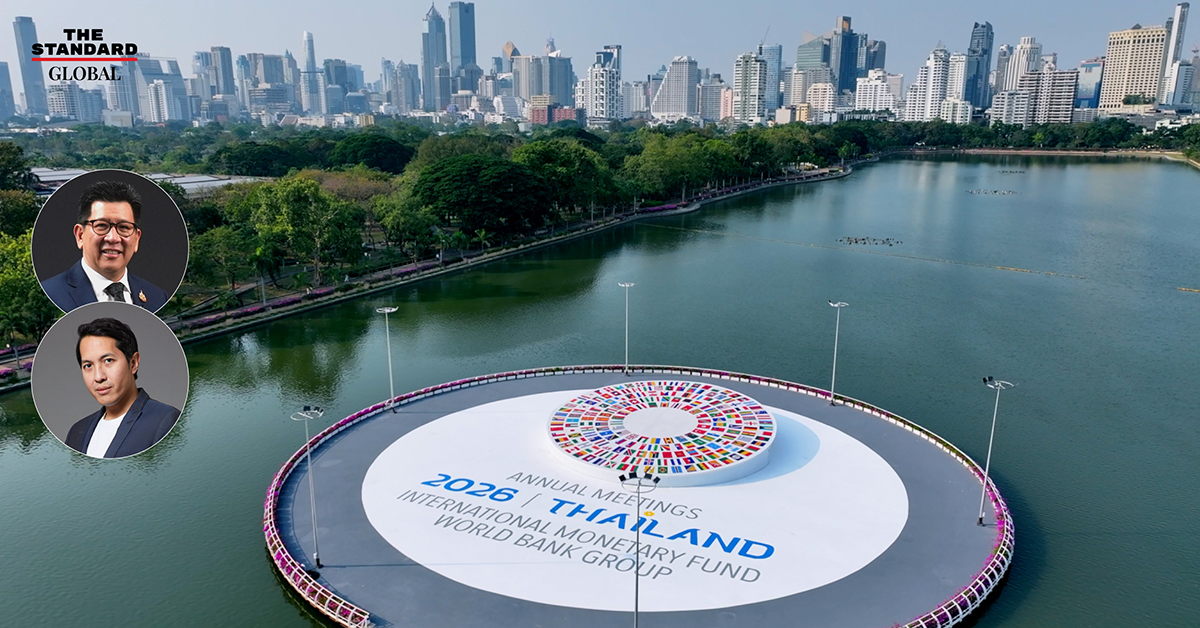
Bangkok is gearing up to play host to the IMF–World Bank Annual Meetings from 12–18 October, one of the biggest gatherings of global economic policymakers and the figures who shape the world economy. As host for the first time since 1991, Thailand is looking to capture global investors’ attention as it seeks to supercharge its economy and open new avenues for growth.
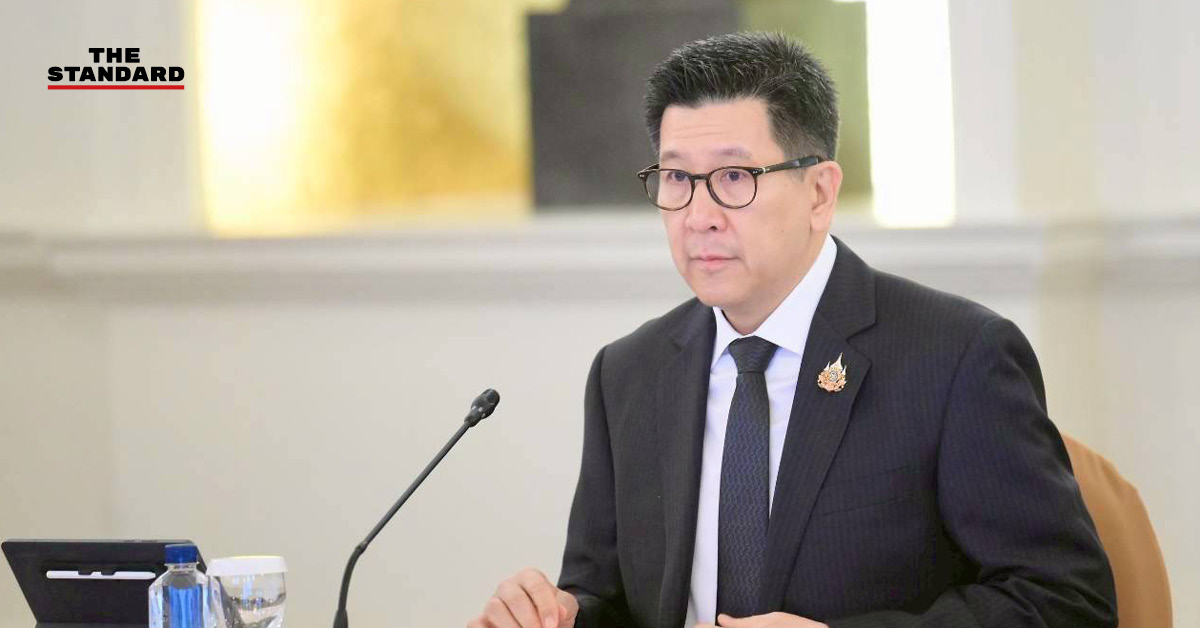
“I’m most hopeful about investment. Capital flow into Thailand is expected to increase substantially,” says Finance Minister Ekniti Nitithanprapas, “but it’s not just about the money. It’s also about the new skills that come with it.”
Attracting that investment is arguably central to Thailand’s mission to revive an ailing economy and break out of muted growth, with GDP forecast to expand just 1.9% this year. But the investment dollars must do more than trickle in. It needs to go substantially towards upskilling a workforce that has struggled to keep pace with rapid technological change, leaving Thailand lagging behind its regional peers.
Ahead of the meetings, Reuters reported that Thailand’s household debt has become a significant obstacle to its high-income ambitions.
The numbers are striking; household debt stood at 85.2% of GDP at the end of June 2026, among the highest levels in Asia. Meanwhile, small and medium-sized businesses are also facing challenges.
Citing Bank of Thailand data, THE STANDARD WEALTH reported that bank lending to SMEs fell by 4.6% in the second quarter, even as credit to large corporates grew by 6.6%.
Reaching high-income status will require productivity gains and industrial upgrading across the value chain. Neither is likely if small and medium-sized firms struggle to access credit while capital pools at the top. Restructuring household debt must also be a priority. Without it, consumers won’t be able to drive domestic demand.
The government will therefore need to focus on creating economic opportunities nationwide. For Ekniti, the ambitious roadmap follows a clear sequence: first, engaging investors by hosting IMF-World Bank meetings and securing investments, then building the cities and workforce of the future.
“I’m also focused on building opportunities and growth beyond Bangkok,” the Minister says. “It isn’t enough for Thailand to win new industries. The income has to be spread across the whole country.”
This sentiment is echoed throughout the recently published World Bank report, “Thailand Cities of the Future: Urban Foundations for a High-Income Economy,” which details how Thailand could achieve High-Income country status by distributing economic activity and productivity more evenly across secondary cities.
It also underpins Ekniti’s argument that Thailand’s provinces have potential, citing Nakhon Ratchasima and Khon Kaen as potential nodes for electronics and related skills, Lamphun as an established industrial location, and Songkhla as a possible link to Penang’s semiconductor cluster.
“Korat also links up with Khon Kaen, which has good universities and excellent hospitals. We also need both places to grow into central cities for the region.”
This belief drives Ekniti’s mission to change the details of each investment incentive. Incoming investors should help develop Thai suppliers and transfer know- how to the local workforce. He referenced the Board of Investment (BOI)’s Skill Bridge program, intended to connect companies’ hiring needs with training as part of the same approach.
Success, therefore, will be measured by the economic opportunities it creates within Thailand. A newly approved factory facility shouldn’t be measured the same as one that’s up and running and has created thousands of jobs, and slapping a Thai supplier’s name somewhere on a list doesn’t establish its place in the value chain. The government can turn these opportunities into a viable economic policy by listing operating projects, local procurement, training hours, and local hiring.
For Ekniti, Thailand’s strength is in its resilience and stability. This is reflected in the Minister’s investment pitch for Thailand.
“My strategy for foreign investors is clear. Today, it’s about building stability, then transition, and from there, it’s about investing in the future.”
The focus, therefore, is about building a solid foundation in which innovation and future-forward industries can thrive. In Thailand, we cannot undermine the power and influence of the private sector, and Ekniti credits private companies for their collaboration and teamwork.
“Today, we’re part of the same team, and we’re doing it together.”
However, more work remains.
Ahead of the IMF–World Bank Annual Meetings, Thailand is lining up meetings between Thai companies and visiting investors and policymakers, but it’s important to realize that these investments and opportunities won’t happen right away.
“Honestly, Thai people won’t feel the immediate opportunities yet,” says Ekniti. “The investments haven’t arrived all at once and will gradually filter down to people as investors hire Thai companies and Thai workers.”
Ultimately, it comes down to upskilling the local workforce so it’s ready to seize opportunities as they arrive. That’s why Ekniti insists investors train Thai workers as they join the value chain.
“Skilled workers earn more,” he says. “When they take home a bigger paycheck, they spend and stimulate the local economy.”
The upcoming IMF–World Bank Annual Meetings in Bangkok underscore Thailand’s ambition to be more than a spectator in the global economy. The mission is clear: upskill the workforce, break free of the stubborn middle-income trap, and ultimately establish Thailand as a serious regional player.
Dr. Santitarn Sathirathai, Vice Minister of Finance, echoed this sentiment in an exclusive interview with THE STANDARD.
“The meetings will transition Thailand from a bystander to a partner. We have the opportunity to shape the agenda, and we have to establish ourselves as a strong partner and showcase Thailand’s strengths.”
Part of this is how Thailand can double down on value creation, whether by leveraging local raw materials and supply chains, establishing R&D centers with local universities, or developing high-skilled jobs for technicians and engineers in Thailand, echoing Ekniti’s earlier sentiment about creating meaningful value.
“This will be how we define investment success going forward, and the BOI is already adopting this as part of their KPI.”
Looking ahead to new-economy opportunities, Thailand will have to connect the dots and adapt our successful pillars, such as food and tourism, to meet new global demands.
“Both sectors (food and tourism) are strong, but how do we capture new trends like longevity? We have agriculture and wellness as the upstream and downstream, but somehow the middle layer isn’t connected.”
There’s often talk that Thailand can produce locally, whether it’s medical devices or functional food. But the same question remains: why can’t the country capture these opportunities? We hear variations of ‘value creation,’ but what’s the real bottleneck?
“It’s in the details,” says Dr. Santitarn. “Thailand’s core weakness is the lack of coordination between the state and private sector. The private sector says it wants to invest, but the state hasn’t updated its regulations.”
Borrowing a football analogy, Ekniti envisions the private sector as Thailand’s strikers, with the state playing in midfield.
“The state’s role, then, is to clear bottlenecks, update regulations, and empower the private sector. But it’s the private sector that has to shoot.”
Ultimately, it comes down to turning meetings and conversations into viable investments and projects, with Thailand fully integrated into the value chain. That task will fall to the government once the meetings close on 18 October. How many commitments will turn into real investment? How much of that investment will bring Thai suppliers into the supply chain and upskill the workforce?
Those answers will measure what the IMF–World Bank meetings in Bangkok deliver, and perhaps the country’s most meaningful step toward its high-income ambitions.