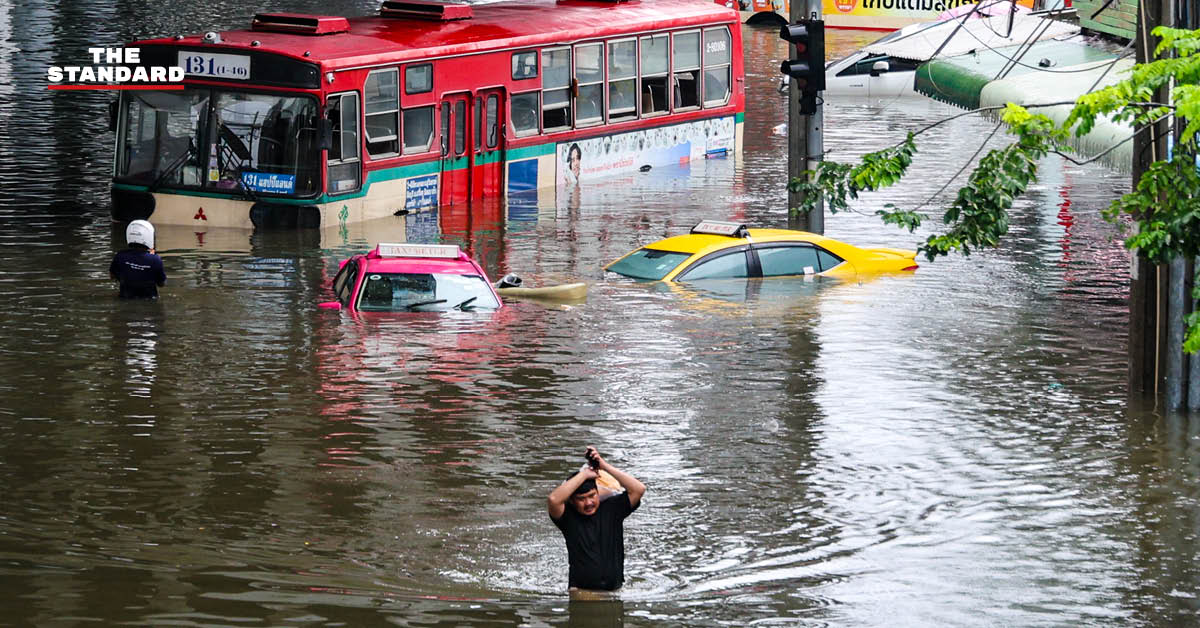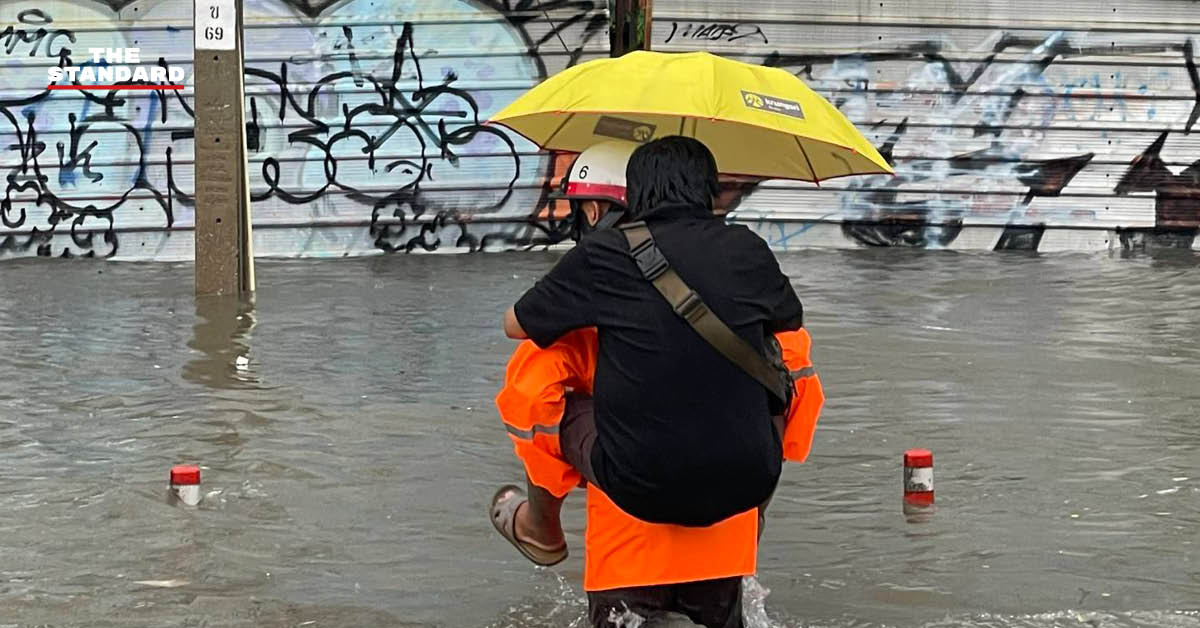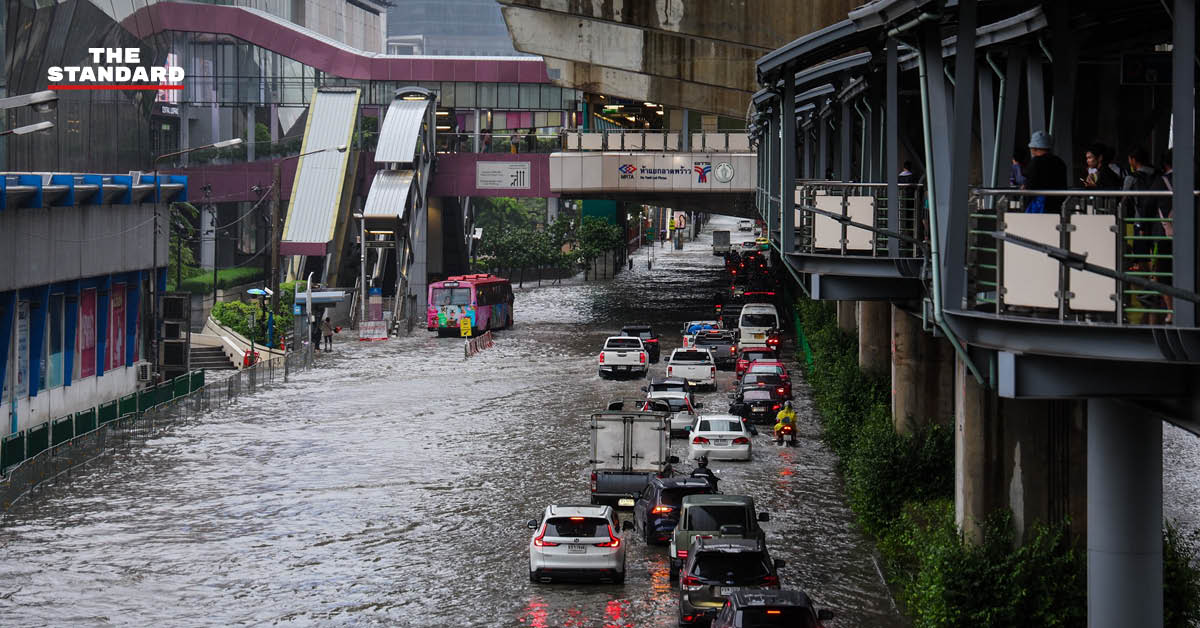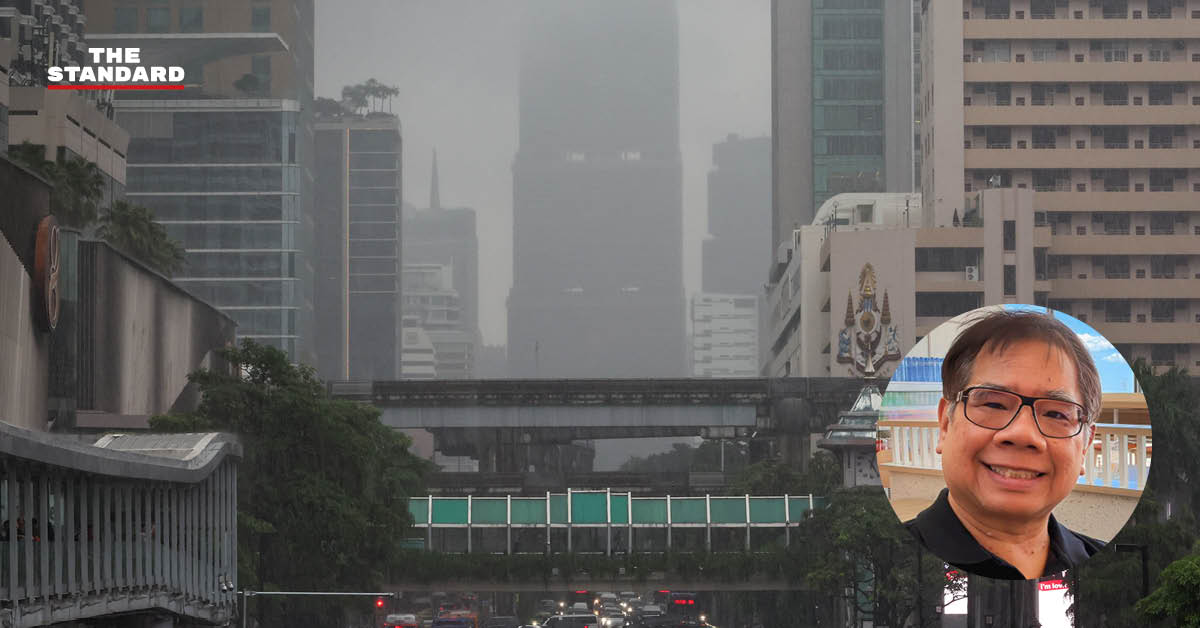



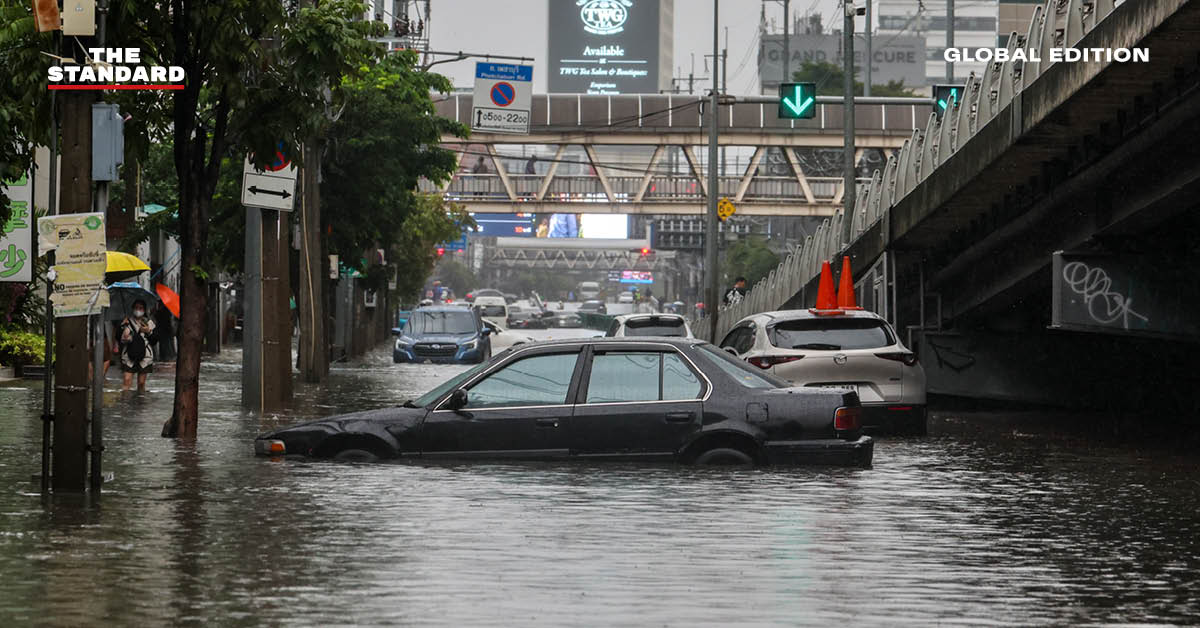
Bangkok Governor Chadchart Sittipunt has declared all 50 of the capital’s districts disaster areas as rainfall continues to disrupt daily life, from flooding across residential and commercial areas to traffic jams and business disruption.
Bangkok has seen continuous rainfall since Thursday evening, and the constant downpour has significantly disrupted livelihoods and brought city life to a halt. Nearly 300mm of rain fell on Bangkok over the span of 48 hours.
By declaring all districts in the capital as disaster areas, the administration allows the Bangkok Metropolitan Administration (BMA) and other state agencies to respond quickly and efficiently to whatever’s required during this time, according to the announcement.
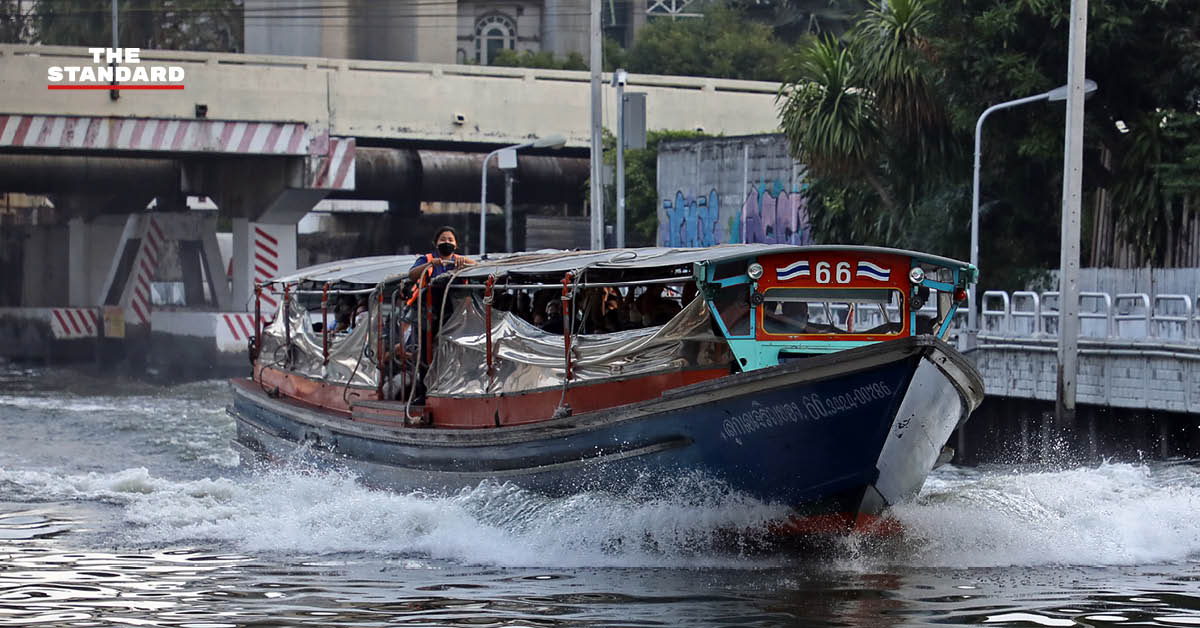
A city-wide broadcast alert was delivered to residents this morning, warning of critically high canal levels and that they are expected to rise further as the day goes on.
While heavy rain is expected to continue nationwide until Sunday, the BMA said water levels began to stabilize this morning as Bangkok’s pumping stations continued to operate at full capacity, pumping out about 1,200 cubic meters per second combined to manage the ongoing rainfall.
Bangkok residents were advised to avoid roads such as Ramkhamhaeng, New Petchburi, Ekkamai and Vibhavadi Rangsit. Those who are concerned about routes can refer to the live map of flooded locations on the BMA’s website.
The ongoing downpour isn’t only impacting residents in the capital, with flooding reported across 20 provinces today, from Chon Buri to Nakhon Rachasima and Samut Prakarn.
Thais are relying on the fast-spreading nature of social media to stay alert and informed, with people issuing warnings about areas to avoid, as well as alerts about those in need of assistance and urgent care. This morning, footage of panic buying across supermarkets and convenience stores such as 7-Eleven emerged online, with images showing empty shelves as people rush to stock up on essentials such as tissues, drinking water, and instant noodles.
According to the Governor, once the rain subsides after the weekend, it should take about 2-3 days to drain all the water.
Key Takeaway:
Bangkok has been hit by near-continuous rain since Thursday afternoon, with heavy downpours forecast to continue through Sunday. As residents contend with flooded streets, gridlock and daily disruption, the deluge raises a wider question about shifting weather patterns and how a city like Bangkok can prepare for increasingly volatile conditions.
As economic activity and Thailand’s GDP growth are significantly tied to Bangkok, any shock to the capital will send ripples through the economy nationwide. This was true during the severe flooding in 2011, when GDP growth was slashed by 1% for the period. When Bangkok and surrounding provinces are hit, productivity and activity come to a standstill.
Several structural factors leave Bangkok particularly vulnerable to prolonged rainfall like this. The city sits on low, sinking ground, and as it modernized, many of its canals were narrowed or filled in to make way for roads, stripping away drainage capacity. Rapid urbanization has also paved much of the city in concrete, leaving less ground to absorb rainwater. Overloaded and often clogged drainage, uneven road levels, and heavy car dependence further compound the issues.
THE STANDARD Global Edition is produced in collaboration with Bitesize Bangkok