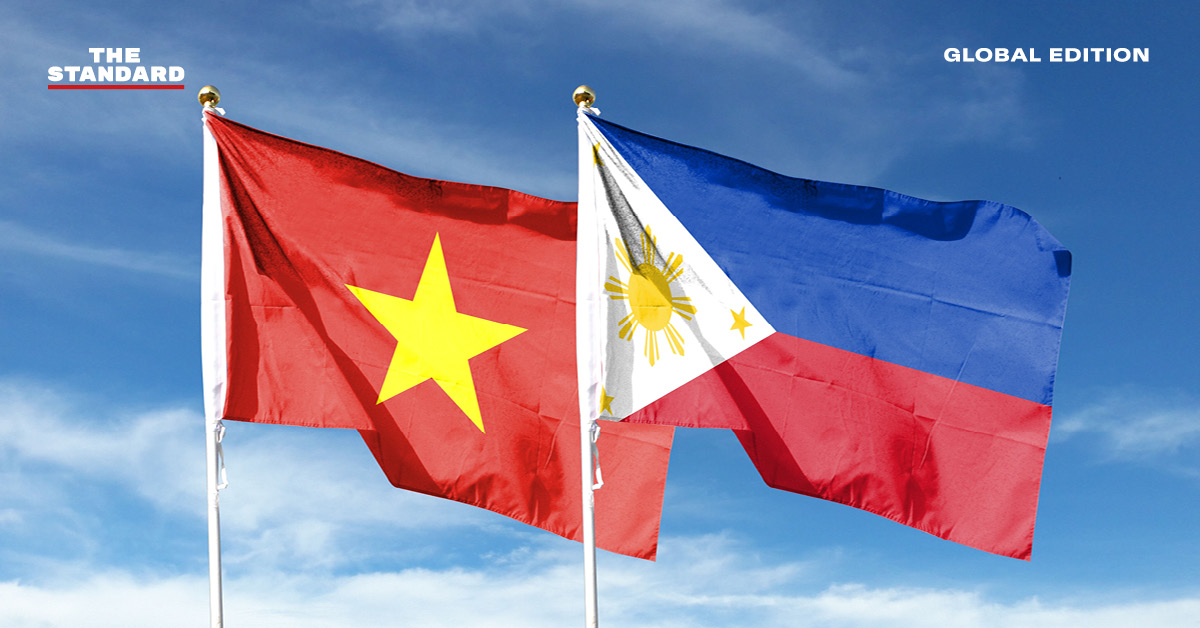
The World Bank has upgraded two Southeast Asian countries to upper-middle-income status, marking a significant shift for Vietnam and the Philippines as they join Thailand in the reclassified economic ranks.
Following consistent years of economic expansion, continued investment, and GDP growth, the two countries have been recognized by the global institution, placing them at the same level as regional peers.
Vietnam and the Philippines had gross national income per capita of $4,970 and $4,850 in 2025, surpassing the World Bank’s threshold for the category. Meanwhile, Thailand has been in this bracket since 2011, marking fifteen years and counting.
Whilst Thailand’s economic growth has remained stagnant for the past decade, the country has recently expressed ambitions to become a high-income country by 2030, driven by new growth industries and structural reform, but there is a long road ahead.
Vietnam and the Philippines took time to arrive at this point. Vietnam spent 17 years in the lower-middle tier, whilst the Philippines spent four decades. Now that it’s joined Thailand at the same threshold, each country will be measured against the same set of standards.
There is something to be said about both countries’ transitions. The World Bank has argued that Vietnam’s export-driven economic growth model and the Philippines’ broad-based economic expansion reflect growth across all major industries, rather than a sector-specific boom. This highlights the importance of fundamentals and of laying the right foundations to support growth, which Thailand has struggled with over the past decade.
Against the upgrade, Vietnam is eyeing double-digit growth this year, fueled by a large infrastructure investment drive. Meanwhile, the Philippines may have a more challenging road ahead, as the country also slashed its 2026-2030 growth targets.
The Key Takeaway
With the World Bank’s reclassification, the Southeast Asian region will now share the “upper-middle-income” label, but it’s important to note that the region comprises distinct trajectories, infrastructure, and growth potential.
A classification upgrade does not automatically bring investment potential or growth, and Thailand’s story is a direct example of this. The country has remained stuck in its middle-income trap for decades and now faces the uphill challenge of reform and transition to competitive new industries. It highlights that the real obstacle will arise after classification and that the path to high-income status is where it gets challenging.
THE STANDARD Global Edition is produced in collaboration with Bitesize Bangkok