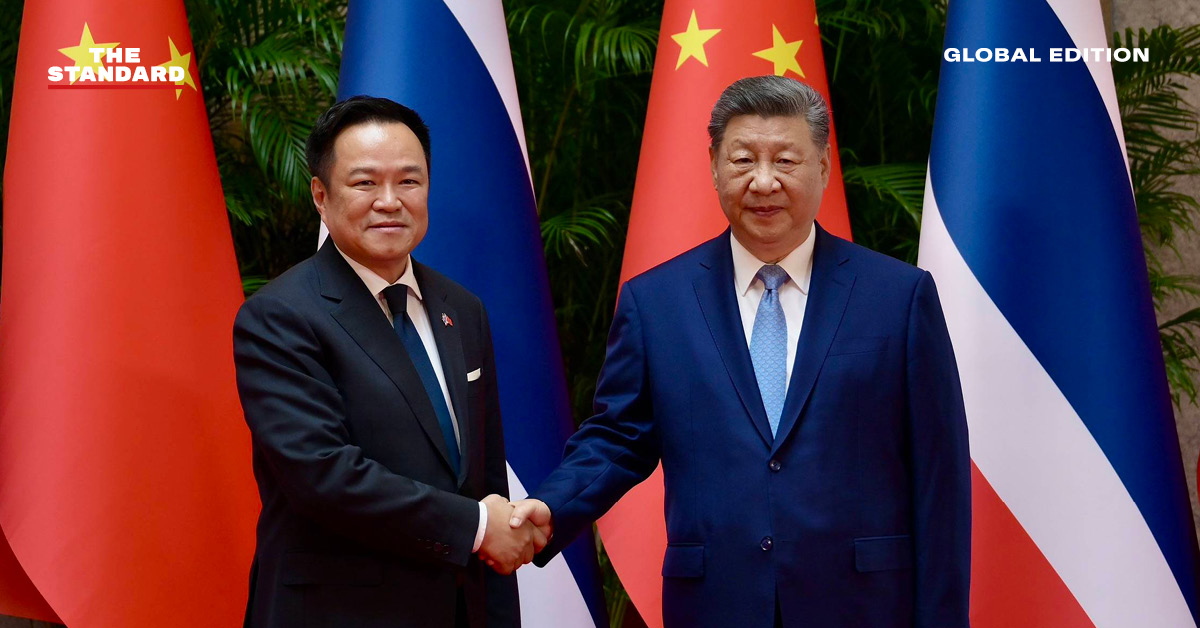

Deputy Prime Minister and Minister of Finance Ekniti Nitithanprapas has announced a structural overhaul of Thailand’s Joint Public-Private Consultative Committee (JPPCC), taking a proactive step towards charting the country’s economic recovery and growth targets.
The JPPCC was mainly a passive forum used for the private sector to submit proposals through the state, but will now be overhauled into active vehicle to drive joint economic execution between the government and the private sector. The agency will see Ministers, state agencies and private sector stakeholders come together to propose practical solutions to challenges.
Prime Minister Anutin Charnvirakul has labelled the new JPPCC format as an ‘Economic Cabinet Plus.’
The main shift? Proposals and initiatives from the private sector will no longer be stalled at the committee stage, thereby taking a more proactive approach towards collaborations and producing real results. The new way of working will follow an OKR template, as each initiative must have a designated lead agency, measurable indicators, and a defined timeline for implementation.
This overhaul is a prime example of Dr. Ekniti’s efforts to tackle Thailand’s structural challenges at the core as a way to improve economic efficiency and enhance productivity. As the Minister says, Thailand’s economic underperformance is linked to the country’s various structural bottlenecks.
New Priorities & Ambitious Targets For Growth:
The JPPCC’s new targets include:
- Lifting GDP growth above 3%
- Raising investment as a share of GDP toward 30%
- Achieving high-income status within 12 years
Four sub-committees will be established, each anchored towards a sector-specific growth pillar.
- New Economy and Infrastructure (smart electronics, data centers, AI, EVs, clean energy)
- Trade and Localization (tourism, agri-food, soft power, SME integration into global value chains)
- People (workforce upskilling, reskilling, AI, and digital capability)
- Government (deregulation, digital government, streamlined permitting and approvals).
Each subcommittee will report progress to the JPPCC every two months, with deliverables structured across 6-month, 1-year, and 4-year horizons.
The government has also outlined 7 priority sectors, from smart electronics, tourism to medical and wellness.
“The world will not wait,” says Dr. Ekniti, echoing a sentiment often repeated this year amid shifting geopolitical order, new supply chain alignment, and a technological disruption across key industries.
The Key Takeaway
This announcement signals an urgent need for state agencies to shift and adapt to more pressing realities. As the world continues to demand more of developing economies, Thailand will need to remain agile and proactive, as Dr. Ekniti acknowledges, the current reality will not wait for countries to move as they used to. The country has potential and can rely on existing sectors, such as medical tourism and wellness, but we cannot afford to be complacent.
This new architecture for JPPCC places accountability at its core, making it a more effective method of collaboration. The 12-year target of transitioning to a “High Income” nation is ambitious against the backdrop of the current 1.6% growth, and whether this target succeeds here depends entirely on execution across the entire value chain, from proposal to sector-specific schemes.