
Although current headlines may be focused on Thailand’s high export growth and Artificial Intelligence (AI)’s contribution to the surge, recent remarks by the Bank of Thailand Governor suggests there’s more to the numbers.
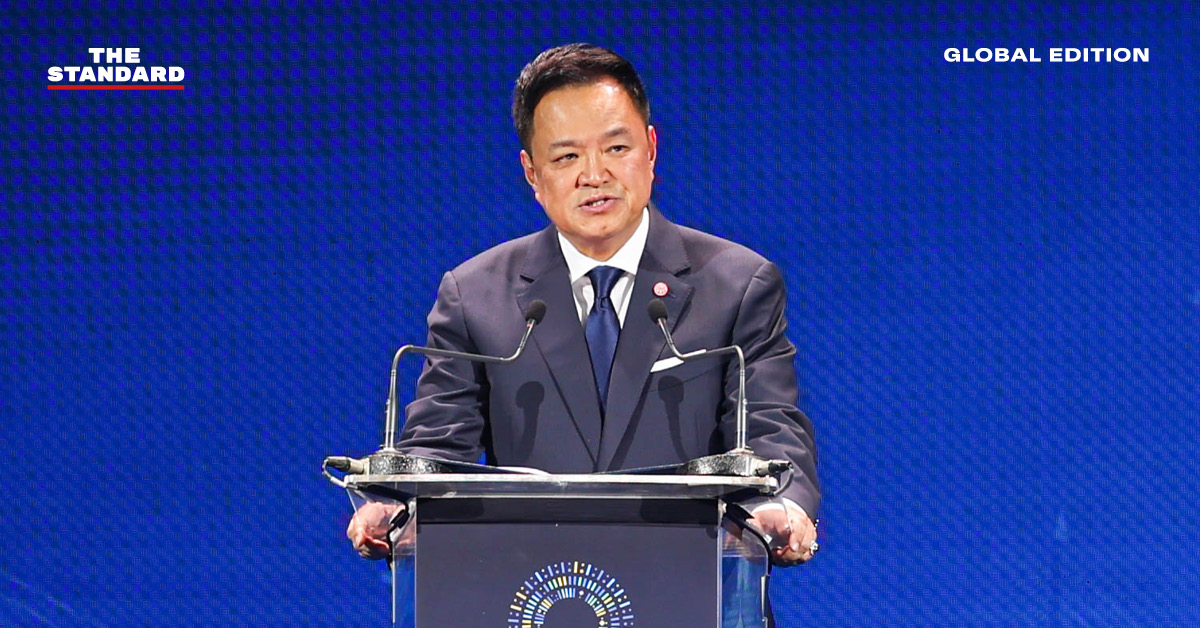
Speaking at the Bank of Thailand’s 2026 annual seminar for its Southern Regional Office on 13th July, BOT Governor Vitai Ratanakorn said that while the central bank expects overall Thai export growth of around 14% this year, the growth isn’t widespread across the entire economy.
Growth is concentrated mainly in electronics and technology, with the sector expanding by 43%, while other industries only see limited growth rate of 2-3%. Dig deeper, and the data will show that 1% of producers account for as much as 85% of total electronics exports. 87 out of the 105 companies are foreign firms that are using Thailand as a production base, which means that local economic impact is limited.
When the figures are skewed towards foreign firms manufacturing in Thailand, it also means that reliance on imported raw materials is high. Import growth is at 20%, higher than the export figure of 14%.
“We used to rely on import content of around 45%; now that share has risen to 70%. Do we gain anything? We do, but not as much as people think,” says the Governor.
The Governor also remarked that Thailand’s potential GDP has fallen to 2.7%, reflecting the much cited structural challenges, from an aging society which has shrunk the country’s labor force, to decades of weak investment compared to regional peers such as Malaysia and Vietnam.
This is what happens when a country lacks technology upgrades and continues to rely on old production methods. The Governor cited an investment index benchmarked to 1997, with Thailand only having risen to 106, whilst Malaysia grew beyond 200 and Vietnam skyrocketed to 900.
These components ultimately impact a country’s potential GDP, and the Governor stresses Thailand’s need to adapt, or continue to face a decline in competitiveness. We’re currently seeing K-Shaped recovery, where large corporates and commercial banks continuously report strong earnings, whilst SMEs are faced with limited access and financial strain across the value chain.
The Key Takeaway
Thailand’s export figures may appear significant from a headline point of view. A headline expansion fueled by technology and AI sectors can create the illusion of a forward-looking economy, but a closer look paints a more realistic picture of foreign capital passing through and not contributing significantly to the bottom line.
We’ve heard this story before, and as BoT Governor Vitai Ratanakorn stresses, Thailand needs to start adapting and invest in new technologies, otherwise risk losing competitiveness and fall behind our regional neighbors. As SMEs are generally left out of the K-Shaped recovery, it means that a significant portion of the economy and workforce face limited growth potential and outlook challenges. Thailand’s manufacturing sector has been experiencing slowdown, a result of factors such as two decades of stagnant investment relative to regional peers, an aging workforce shrinking the labour pool, and a lack of production technology upgrades compounded by rising competition from Vietnam and China.
Thailand’s headline tech-driven export boom is simply masking the real challenges at hand.
THE STANDARD Global Edition is produced in collaboration with Bitesize Bangkok