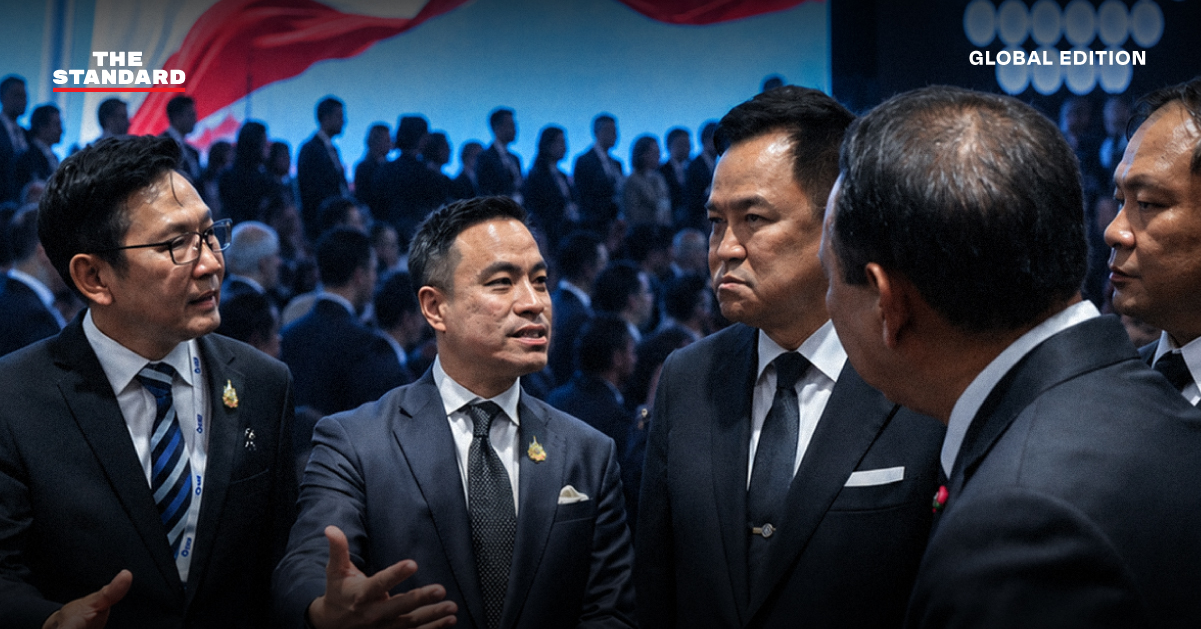

THE STANDARD held its annual Secret Sauce conference at Emsphere last week under the theme ‘Builders,’ bringing together a curated roster of speakers, brands, and experts from across Thailand’s business and creative industries for a two-day event focused on ‘building’ in a hyper-competitive age.
Key Point
Artificial intelligence (AI), rapid technological disruption, and the relentless pursuit of scale have dominated today’s discourse. Whilst it’s essential for businesses to stay on top of fast-emerging trends, the constant chase can also deter us from remembering why we build in the first place.
And that’s what the Secret Sauce ‘Builders’ conference was all about.
It’s All About The Story
From September 9-10, Thailand’s business founders took the stage, not the usual roster of tech experts, but young founders from the creative worlds of fashion, jewelry, fine dining, and coffee. Amid all the noise about AI and automation, one theme cut through every panel and keynote: building a brand is, at its core, a deeply human business.
The ‘How to Succeed in Fashion’ panel on the ‘Young Entrepreneur’ stage emphasized the importance of often-overlooked human skills.
“As a founder, I prioritize mindset and the right kind of attitude when hiring and growing my team,” says Thidakarn ‘Rika’ Tetananontsakul, founder of fashion label Studio Unknown. “Every team member needs to have a can-do attitude; this is something which cannot be taught.”
These human elements also translate to crafting an entire customer journey, whether it starts with online scrolling or unboxing a pair of jeans at home.
“Customers look for intention and honesty from our brand,” says Tanyarat ‘Zen’ Trisuramongkolchote, co-founder of sustainable fashion brand She Knows, also the first Thai brand to be certified as a Certified B Corp™ business. “We want them to feel good; it’s no longer just about selling products, it’s about being associated with a feeling and trust.”
Rika echoes this sentiment. “Customers want the whole story. They don’t just buy the clothes; they buy the story. We present them with a narrative of how one outfit can take you straight from the office and onto the skytrain for a date, and customers lean into this; they purchase the total look.”
Yavista ‘Prim’ Krinchai, founder of jewelry house YVIS, says she prioritizes giving customers the full brand journey. “Our customers come in and buy a feeling. It goes beyond a piece of jewelry; our brand makes them feel a certain way, and we pay attention to this across the value chain, from our photoshoots to our packaging.”
Ultimately, good founders have to practice what they preach and live the truth they’re selling to the world. As customers hold brands to a higher standard today, it’s important to stay true to your core brand value.
“She Knows has proven that you can still grow and scale by being niche and staying true to your core values,” says Zen. “A good founder has to balance between saying no to unmatched opportunities and yes to ones that make sense.”
Looking ahead to 2027, all three founders are prioritizing slowing down and returning to brand basics by focusing on each brand’s core identity amid rising competition, lower barriers to entry in the Thai fashion scene, and supply chain challenges.
“Ultimately, it’s the power of community that allows your brand to grow,” says Prim.
Creating Value Through Storytelling
Meanwhile, human-centric touchpoints can also carry over to fine dining. During a panel that uncovered the minds of Thailand’s leading chefs, Chalee Kader of award-winning restaurant Wana Yook, Chudaree “Tam” Debhakam of two Michelin-Star restaurant Baan Tepa, and Kongwuth Chaiwongkachon of Chiang Rai’s Locus Native Food Lab shared how they each create value across different fine-dining experiences for customers.
“It’s about how you make them feel during and after the meal; that’s what makes people come back to your restaurant,” says Chalee. “It’s important to focus on the small details to avoid being like everyone else in the copy-and-paste generation.”
For Tam, it’s also about reminding diners of familiarity and comfort amid excitement often highlighted in fine-dining experiences.
“I always try to highlight at least one dish that brings out a sense of comfort,” she says. “Something that’s grounding and familiar, I think that’s important.”
For the three chefs, creating a strong narrative behind every seasonal menu and a story behind each dish is important, not only for the customers but for themselves and their team.
“The entire value chain has more meaning that way,” says Tam. “Whether it’s how we sourced a particular type of rice, or a local produce.”
Put Yourself in The Brand
In today’s technological race where everyone seems intent on disrupting their industry, some of Thailand’s most notable entrepreneurs are making the case for keeping human needs at the center.
Chanisara ‘Mint’ Ungsawasdi, co-founder of Alter Protein, shared that her brand was born from a personal need and pain point, and that she spent a lot of time crafting a brand personality before conducting market research and gathering data-driven insights.
“I spend a lot of time thinking about the brand persona. If my brand was a person, what kind of behaviors or personality would they have?” says Mint.
In a thriving copy-and-paste age, authenticity has emerged as a valuable asset for successful brands and founders.
“Flavor or branding can always be replicated by competitors, but what they can’t copy is authenticity. It’s this difference that will ultimately drive success.”
Meanwhile, Amalanan ‘Neat’ Sungsitiwong and Wannit ‘Ewe’ Boonchareontawesu, co-founders of Slip to Sleep, also started their successful sleepwear brand for women from a very personal pain point before growing their empire and taking their brand to New York Fashion Week in 2025.
“We started the brand from a very simple and personal pain point of wanting no-bra pajamas that would allow women to transition from the bedroom to their living room with other family members without much hassle.”
They turned this personal pain point into a clear customer need, helping the brand become top of mind through clear communication, product positioning, and core values.
Both co-founders are leveraging personal instinct and on-ground customer data to chart the brand’s path to growth. Slip to Sleep is eyeing a 500-million-baht target for 2027 and plans to expand into new Wellness and Lifestyle categories, while keeping comfort as its key brand anchor.
Often, it’s something as simple as balancing data-driven decisions with your own founder instincts, something that Nutchar “June” Rachataworaphon, founder of fashion label Maison KEEPS, has learned and shared in a keynote.
“Instinct is a good starting point, but not the final answer, because anyone can be right or wrong with pure instinct. What actually tells you whether you were right is the sales that come back, both in numbers and in customers’ own words.”
Launching new products will inherently come from founder instinct, but it’s important not to rely purely on personal feelings for growth. However, the brand still has to maintain its identity.
Key Takeaway
At Secret Sauce’s ‘Builders’ conference, Thailand’s founders converged on a shared thesis: human judgment, creativity, and storytelling remain the real differentiator when you’re building or scaling a product.
Across fashion, jewelry, and fine dining, brands compete less on product and more on feeling, narrative, and authenticity, qualities data can refine but not originate. Founders point to a maturing playbook: personal pain points spark differentiation, instinct drives early bets, and data sharpens execution without replacing identity. Entering 2027, the common strategy seems to be doubling down on core values and authenticity as competition intensifies and barriers to entry keep falling in this increasingly fast-paced economy.
THE STANDARD Global Edition is produced in collaboration with Bitesize Bangkok