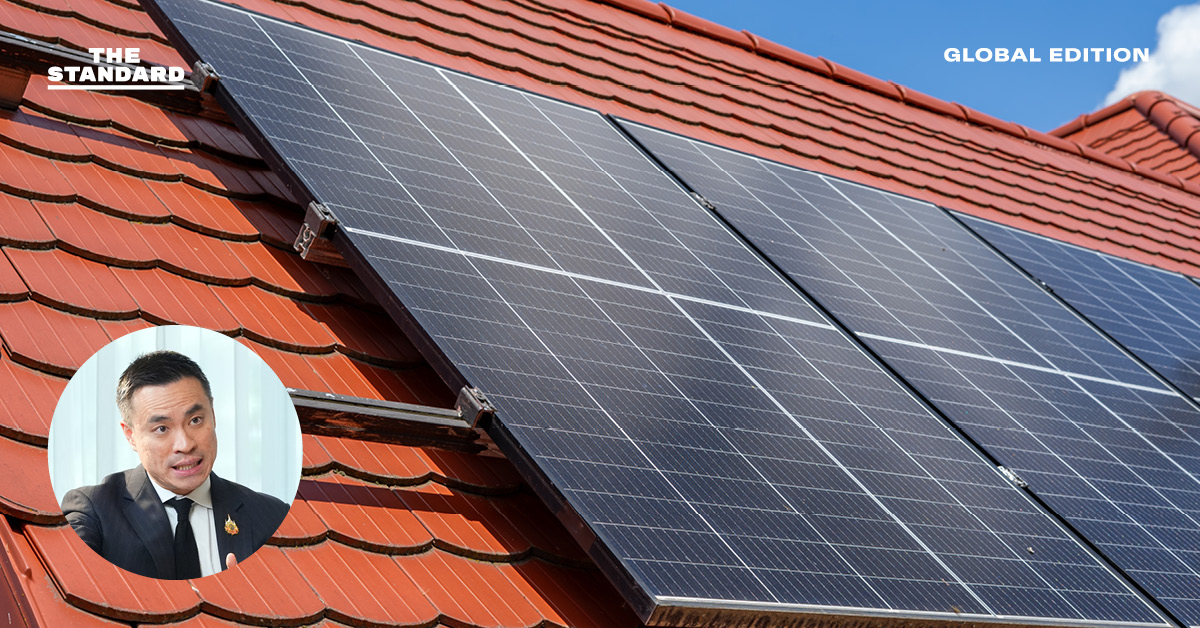
Thailand is reaffirming its commitment to solar and renewables, with the Ministry of Energy pushing to expand adoption at the household level. While we have heard about household solar before, the policy is inching closer to reality this week as Energy Minister Akanat Promphan confirms plans to reserve 10,000 megawatts of rooftop solar capacity for Thai households amid a nationwide overhaul of Thailand’s electricity sector.
Key Point
Under the plan, individual systems would be limited to 5 kilowatts to accommodate nationwide demand. Meanwhile, Finance Minister Ekniti Nitithanprapas says this is the first step towards boosting clean energy production, as well as awareness and adoption across households. By making solar more accessible and shifting away from industrial-scale solar, Thailand is taking steps to make renewables and clean energy more approachable for the public and accelerate adoption.
Solar Scheme Subsidies Aimed to Widen Adoption
With this scheme set to launch in October, the government is targeting an initial rollout to 1 million households, with subsidies of 50,000 baht per installation.
Now, here’s where the real benefits will lie. It’s not just about converting households into solar spots; it’s also about providing incentives to families and homeowners. The main objective is to gradually convert homeowners into electricity producers, allowing them to sell surplus power back to the grid. This policy will position people as active owners in the value chain, but its effectiveness will be contingent on the government’s supporting infrastructure.
According to Akanat, the government would purchase surplus output and credit its value against the household’s electricity charges within the same billing period, meaning families can use power generated while they’re away from home during sunlight hours.
Thailand’s New PDP & How it Fits Together
Thailand’s Solar strategy is also part of the country’s Power Development Plan (PDP), scheduled to be finalized by year-end. The blueprint will guide the country’s targets for power capacity, fuel mix, and clean energy share over a multi-year horizon. The most ambitious part of the PDP aims to raise the share of clean energy from just over 20% to close to 50% within 10 years, and no less than 65% in the long term. The government’s latest Solar initiative reflects this long-term mission and is arguably the most straightforward to measure for success and adoption.
A Reliance on Chinese Solar
Thailand’s interest in solar continues to increase, with demand for solar imports growing in tandem. According to the latest reports from the Ministry of Commerce and the Customs Department, Thailand’s solar panel imports surged 88.7% year on year to US$427 million in the first seven months of 2026.
This figure is likely to increase as the government prepares to roll out its solar subsidies program. Interestingly, China supplied most of Thailand’s imported solar panels during this period, accounting for 99% of the total import value.
This dependency is worth watching. Thailand is trying to reduce its reliance on foreign partners amid rising geopolitical tensions, yet it still has to rely on Chinese-made solar to move ahead with the transition.
Key Takeaway
Previously, solar was mainly marketed as a large-scale industrial play, targeted at big businesses and the industrial sector. By shifting the focus to a more approachable household rollout, Thailand can ease into its renewables target while also benefiting families and homeowners by easing the electricity cost burden.
A successful rollout of the solar panel policy will accelerate households’ adoption of green energy, but true success will largely depend on state infrastructure and its role in supporting installation and inspection. The electricity authority will inspect the wiring, smart meters, and the entire value chain to prevent fire hazards.
One thing that’s worth keeping watch on is the potential of a new untapped nationwide job market, from electricians to installation technicians and maintenance staff, creating more high-value work and upskilling for the current workforce. This aligns with what Finance Minister Ekniti has echoed previously: that the government is prioritizing the training of Thai workers within the work of assembly, installation, and maintenance of solar
Despite most imports coming from China. In the future, Thai industries may also be able to carve out a production role within the value chain.
THE STANDARD Global Edition is produced in collaboration with Bitesize Bangkok