Rain in Bangkok is expected to ease from today after continuous downpours since Thursday afternoon left large parts of the capital underwater. Key residential and commercial areas, including New Phetchaburi Road, parts of Ekkamai, Ramkhamhaeng and Bang Kapi, were among the hardest hit, with residents stranded and floodwater pouring into homes.
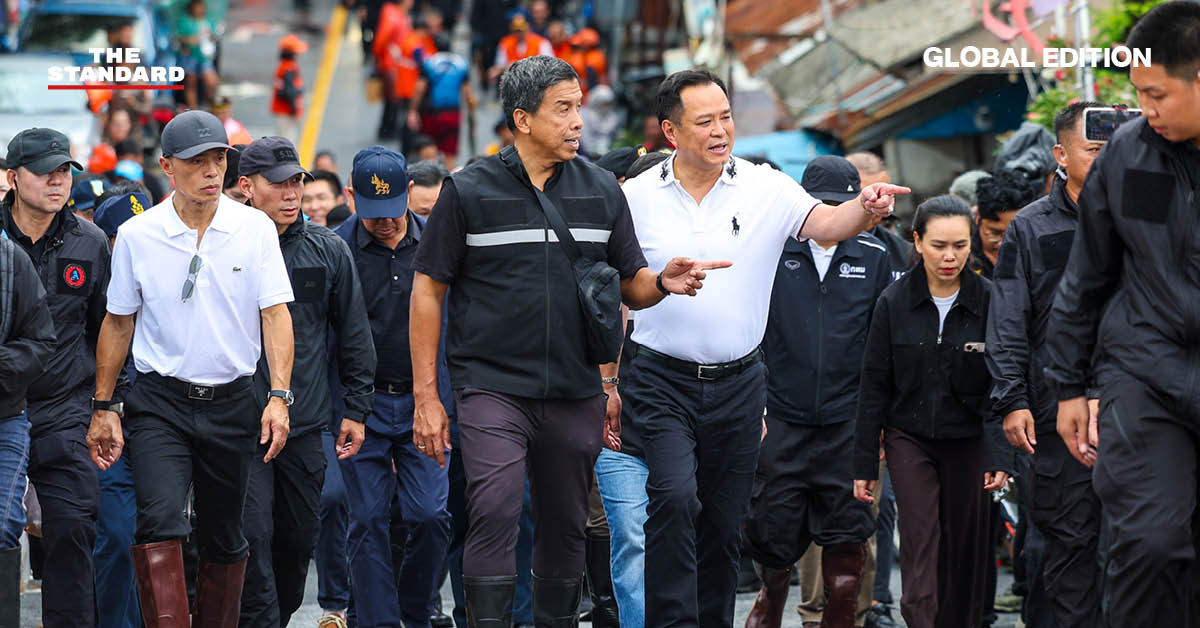
Bangkok Governor Chadchart Sittipunt declared 50 districts in Bangkok disaster areas over the weekend to speed up response times and support communities in need.
Although the rain eased on Sunday, intermittent showers throughout the day kept floodwater from draining in low-lying areas, leaving roads and neighborhoods flooded through the day.
As the rain begins to ease from today, the city’s pumps and drainage system should finally be able to clear floodwater from critical areas. Chadchart estimates it will take two to three days to fully drain the city once it stops raining.
Online platforms and social media has once again emerged as a critical tool during testing times in Thailand, with people sharing resilience and survival tips and rallying around each other for help amid rescue efforts by boats as many had to evacuate from their homes. People have also turned to social media for help, amid some criticism over the lack of prompt response from government units. While the Bangkok Metropolitan Administration (BMA) has invested heavily in improving drainage systems and cleaning, the sheer force of rain since Thursday has overwhelmed many parts of the city.
Accumulated rainfall topped 300 millimeters in parts of the city over several days, pushing Bangkok’s drainage system to its limits. While evacuations are underway, many residents have taken to social media to say they remain stranded.
The government has approved 28 September and 29 September as special public holidays for Bangkok, Nonthaburi, Pathum Thani and Samut Prakan to help ease the impact of flooding.
The emergency at home has also prompted Prime Minister Anutin Charnvirakul to cut short an official trip to London, as online criticism mounts over what many see as slow assistance and inadequate warning from relevant government units. Many Bangkokians have taken to social media, saying they’ve been left to fend for themselves during this time.
Meanwhile, Thai Airways flights at Suvarnabhumi Airport faced lengthy delays and baggage backlogs after flooding prevented many of the airline’s ground-handling staff from getting to work.
Bangkok will recover from this disaster, but the economic toll on people’s livelihoods will linger. The past few days have raised serious questions about the city’s infrastructure, its structural weaknesses and the effectiveness of the government’s response. How the country answers them, and what it does proactively, could serve as a blueprint for handling future disasters as weather patterns grow more extreme.
THE STANDARD Global Edition is produced in collaboration with Bitesize Bangkok