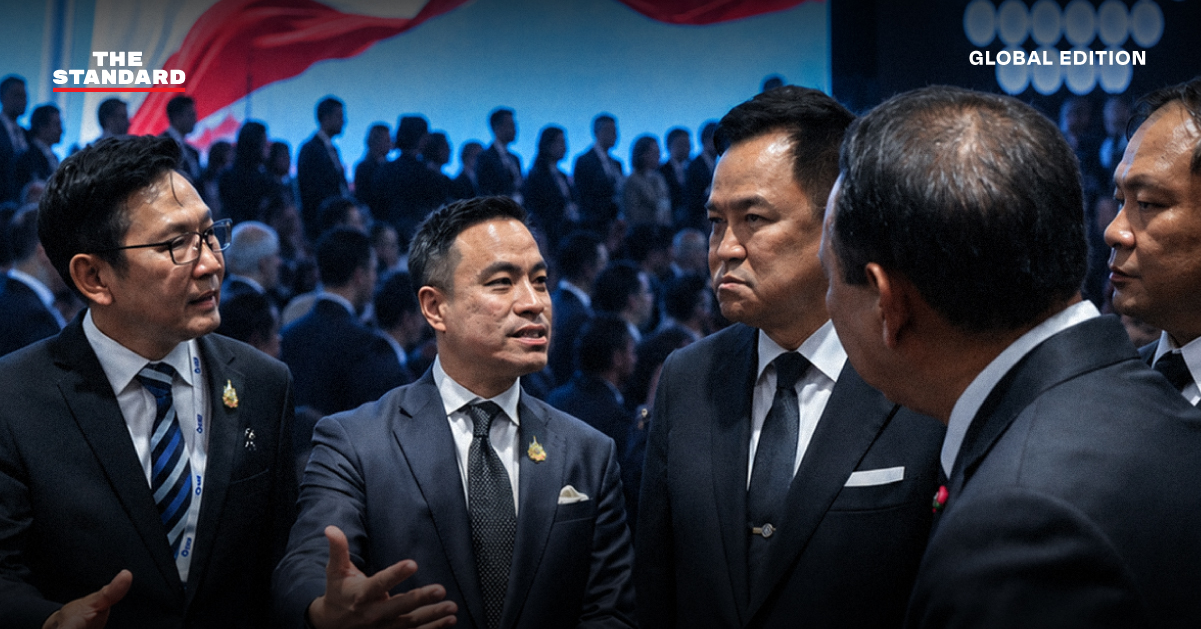
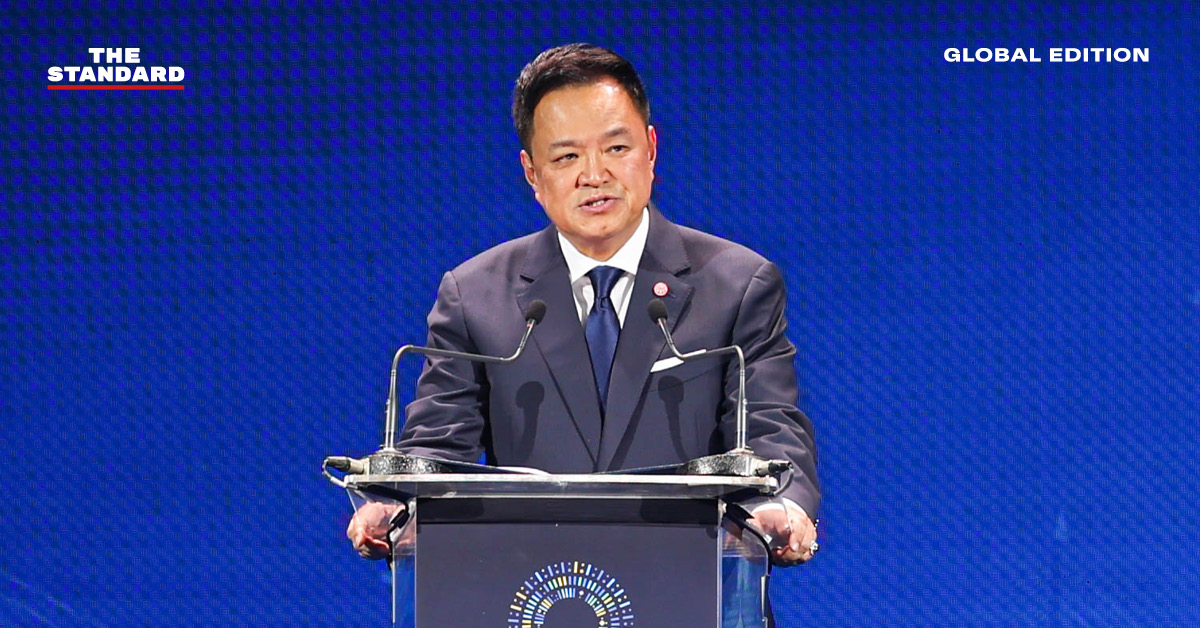
On 3rd September, the Joint Standing Committee on Commerce, Industry and Banking (JSCCIB) joined forces with the Ministry of Finance, the Bank of Thailand, the NESDC, and the World Bank held the Bangkok Business 2026 at QSNCC, as part of a key agenda ahead of the IMF-World Bank Annual Meetings, scheduled to be held in Bangkok during 12-18 October.
Key Point
With the significant IMF Meetings scheduled next month, it serves as a fitting backdrop for Thailand’s path towards economic and structural reform across key dimensions; creating high-skill jobs, building clean energy infrastructure and a thriving digital financial system, elevating the agriculture sector and work towards zero-corruption.
The public and private sector have been pushing the reform agenda for the past years, and especially amid external shocks and challenges, Thailand’s structural weakness is quickly catching up to us, causing the country to trail behind regional peers in aspects of GDP growth, innovation and regulations. Whilst Thailand continues to acknowledge our own shortcomings through public forums and commitments towards reform, the time has come to put in the work and strive for tangible results.
The meeting was a gathering of Thailand’s most notable figures, with keynotes from Prime Minister Anutin Charnvirakul, Deputy Prime Minister and Minister of Finance Ekniti Nitithanpraphat, Bank of Thailand Governor Vitai Ratanakorn and Pimjai Leeissaranukul, President of The Federation of Thai Industries (FTI), amongst other prominent figures from the private-public sector.
Reform was the overarching theme for the day, with each keynote highlighting the world’s increasingly fractured and complex order, and what that means for Thailand’s own competitiveness.
📌 Key Government Figures on Boosting Competitiveness
Prime Minister Anutin Charnvirakul pledged to boost Thailand’s competitiveness through rule easing, reliable infrastructure and a faster decision making route. Thailand must adapt to rapid technological adoption, beyond merely being ‘users’ of technology, and aspire to become more than an ‘assembling base’ for manufacturers.
Meanwhile, Finance Minister Ekniti Nitithanpraphat leaned on the concept of leveraging the region’s strengths to create new growth engines, whilst navigating increasingly complex geopolitical divides. Thailand cannot act alone, and ASEAN connectivity remains the key to thriving in a world where AI, climate change and aging societies become threatening forces to growth. The region will need to look beyond competing to attract data centers, and actually invest in making technology accessible across all SME segments. Meanwhile, leveraging the ASEAN power grid could also be key to increased energy security.
📌 Bank of Thailand on Building Resilience
Bank of Thailand Governor Vitai Ratanakorn acknowledged that each aftershock from a major global crisis leaves Thailand more vulnerable.
“For Thailand, each major crisis has left the economy on a lower growth trajectory, with average growth declining from 5.3% after the Asian Financial Crisis in 1997 to 3.7% after the Global Financial Crisis, and now to just 2.4% after the COVID pandemic.”
Building long-term growth capacity is the key challenge here, especially as the world has become more prone to severe shocks, from geopolitical conflict to energy shocks and AI disruption.
Whilst Thailand’s digital payments infrastructure remains strong, with PromptPay’s national rollout and adoption a key success story, Thailand has also lost billions to online financial fraud. To combat this, the Bank of Thailand has partnered with the IMF and World Bank to develop the Bangkok Blueprint for Fraud-Resilient Financial Services and will serve as an international reference standard against digital fraud.
Governor Vitai’s speech was anchored by the theme of establishing financial stability, key to establish security and trust, which is key to raising a country’s competitiveness.
📌 Turning Talk into a Blueprint: What’s Needed From Industries?
Payong Srivanich, President of Thai Bankers’ Association & JSCCIB Chair says that Thailand needs to upgrade its existing economic base, whilst fueling the next generation growth engines. There needs to be a credible and consistent government policy to support Thailand’s digital and energy infrastructure reform in order for new growth engines to be actualized.
Meanwhile, Pimjai Leeissaranukul, President of Federation of Thai Industries (FTI) refererred to specific components for growth, from competitively-priced energy, ASEAN-connected logistics, regulatory reform as well as skills development as equally important to reinventing Thailand’s growth trajectory. Thailand needs to push a ‘Made in Thailand’ agenda, in order to leverage foreign investment and turn them into wins for suppliers, jobs and meaningfully creates domestic value for the economy.
📌 Key Takeaway
The JSCCIB is planning to compile each proposal and keynote from the summit into a White Paper, which will then be carried into the IMF-World Bank Group Annual Meetings 2026. This highlights the agency’s intention in carrying on the Reform narrative well into the IMF-World Bank Meetings, potentially serving as a tangible plan for Thailand’s much-needed reform agenda.
Currently, relevant government and private sector figures are echoing the same sentiment; Thailand is in desperate need of a structural overhaul and reform, especially if the country aims to achieve its goal of reaching a high-income country status by 2037.
The country is trailing regional peers such as Malaysia and Vietnam across areas such as technological advancement, upskilling and new-industry growth engines. Beyond that, Thailand’s own structural shortcomings and our long-standing challenge of abolishing corruption continues to hinder its growth potential.
The success of these meetings and summits will be measured by follow through and gaining credibility on the world stage, not based on rhetorical ambition alone.
THE STANDARD Global Edition is produced in collaboration with Bitesize Bangkok