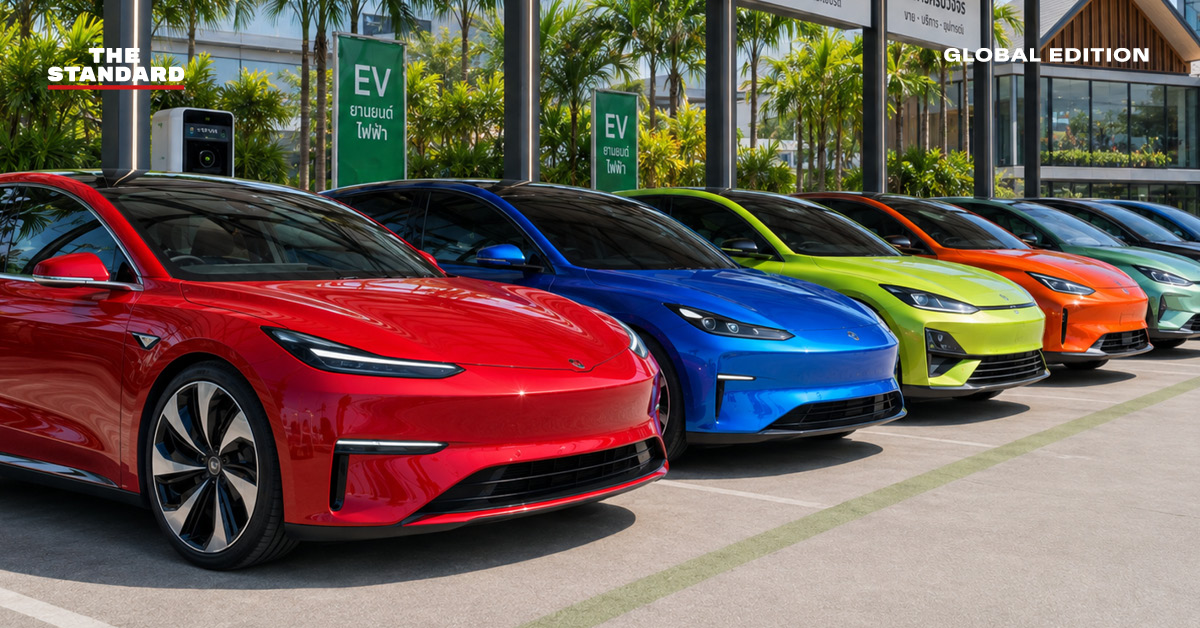
The Ministry of Finance is considering an ‘excise tax reduction’ for operators that plan to set up auto production bases in Thailand, using raw materials or parts manufactured domestically. This differs from previous excise tax plans because it would apply to both existing and new manufacturers and cover makers of internal combustion engine (ICE) vehicles, hybrids, and electric vehicles (EVs).
Key Point
The department will use carbon dioxide (CO2) emission levels as the main indicator for classifying tax measures, ensuring all vehicle types can access this benefit.
The Rationale Behind an Inclusive Tax Break
Instead of focusing solely on vehicle type, the government plans to use CO2 emission levels to determine tax breaks. This move is intended to reduce the impact on manufacturers of internal combustion engine vehicles, or, in simpler terms, the traditional players in the industry. At the same time, the government is supporting the auto industry’s transition to cleaner-energy vehicles by placing CO2 at the core of the policy.
This will allow both ICE and hybrid manufacturers to remain eligible for tax relief alongside newer and emerging EV makers, whilst supporting Thailand’s manufacturing and decade-old industry partners.
If successful, then the tax incentive will push ICE manufacturers to adapt toward hybrid models such as HEVs, PHEVs, or EREVs, without significantly harming employment in the existing landscape. However, it would push manufacturers towards a gradual technological transition.
The Push Towards ‘Made in Thailand’
Beyond the targeted ‘clean energy’ transition, there is also a push for manufacturers to establish production facilities and leverage local components in Thailand, rather than relying on imports and simply assembling them locally. The Excise Department plans to prioritize the entire clean energy production supply chain.
Zooming Out: The Bigger Picture
In July, overall domestic car production surged by 6.12% to 117,383, according to the Federation of Thai Industries (FTI). Domestic car sales also rose by 20%.
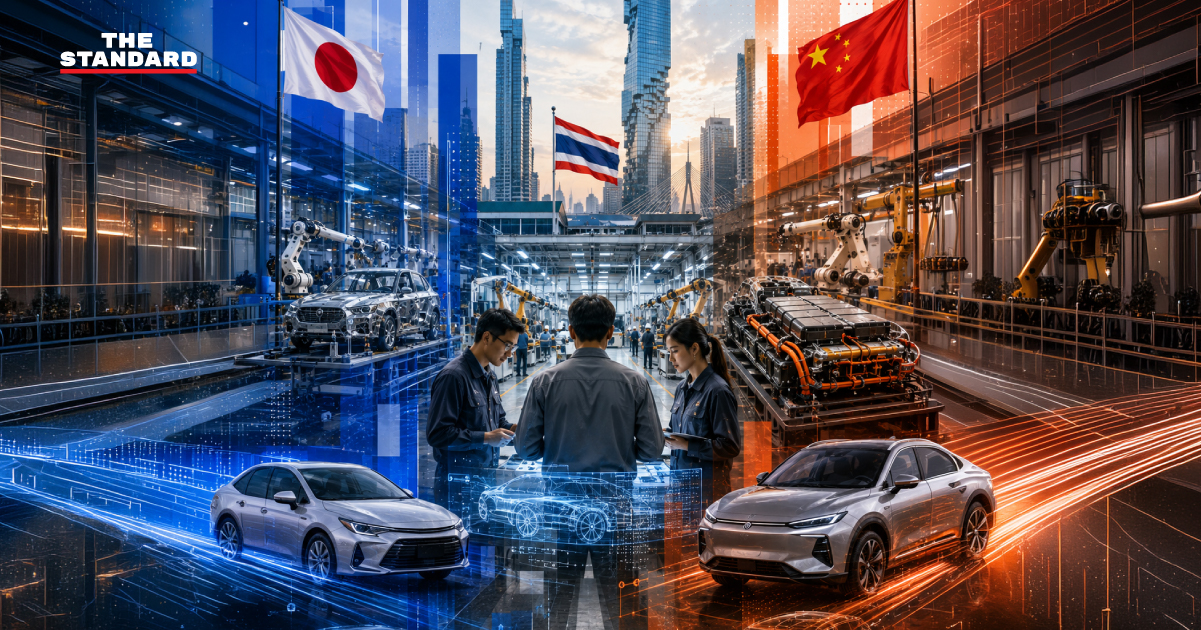
Thailand remains a key hub for auto production in Southeast Asia, with Japanese automakers as critical partners keeping the traditional industry running and its workforce employed. The government’s consideration of a CO2 excise tax is a careful balancing act between accelerating the shift to cleaner vehicles and protecting the ICE/hybrid manufacturing base that Japanese automakers depend on. It gives automakers room to adapt, while encouraging cleaner energy emissions.
Key Takeaway
Pushing for green mobility as a critical part of Thailand’s energy transition has never been more important or timely. In the background, parliament has greenlit the government’s THB 400 billion emergency loan decree, with half allocated to Thailand’s energy reform and a push to reduce dependence on traditional energy imports. Last month, it was announced that Deputy Prime Minister and Minister of Finance Ekniti Nitithanprapas was planning an overhaul of Thailand’s transport vehicles and swapping them for an electric fleet. However, details on that transition remain limited.
Meanwhile, Thailand’s position as a traditional manufacturing base is becoming vulnerable to regional technological advancement and rapid upskilling. The country’s legacy base is being squeezed between cheaper FTA imports, Chinese EV competition, and more. With multiple incoming challenges, the excise tax revision is an attempt to intervene while there is still some wiggle room.
THE STANDARD Global Edition is produced in collaboration with Bitesize Bangkok