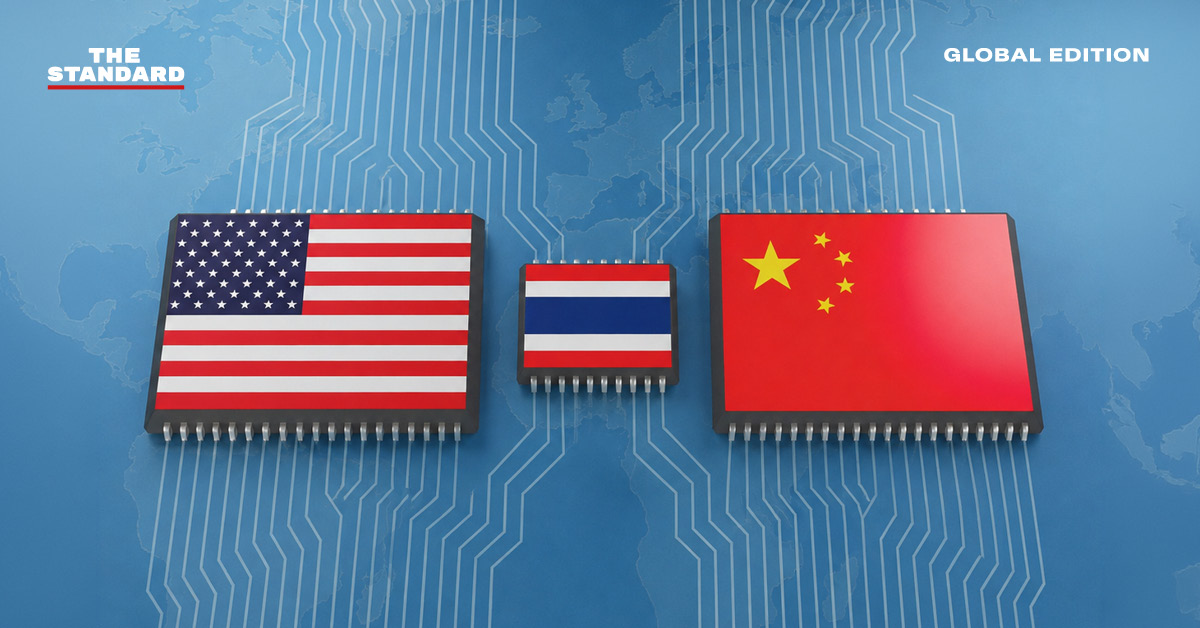
The Artificial Intelligence race between the United States and China continues to intensify, with the technology increasingly being used as the defining tool of great super power and a symbol of each country’s economic and technological advancement.
Key Point
For the US and China, Artificial Intelligence has become an infrastructure of influence, spanning influence across multitudes from soft power to skilled population, as well as information control and security.
The AI rivalry traces back to 2022, when Washington’s stance has been denying China access to cutting-edge semiconductors and the equipment to make them. Meanwhile, China quietly and quickly began its own R&D, with the mission of being self-reliant in this area of technology. Fast forward to 2026, and the result is separate supply chains, architectures, and increasingly incompatible AI infrastructure on each side.
This week, the US is reportedly preparing to tell “dozens of countries” that they must pick sides in the ongoing AI race with China, with warnings of exclusion if countries sign up for Beijing’s competing AI framework. In 2025, the US launched the Pax Silica initiative, the State Department’s flagship AI initiative aimed at building secure, allied-country supply chains from critical mineral to energy inputs, or essentials needed for a thriving AI infrastructure. Many countries have joined, such as Japan, Australia and South Korea. Kazakhstan is the only country that have joined both the US and China’s initiative.
By pressing its allies to choose sides, the US is hoping to keep China away from resources it needs to accelerate in its AI race.
Prime Minister Anutin Charnvirakul responded earlier this week that Thailand’s response to the escalating AI race is to remain neutral, a sentiment also echoed by Digital Economy Minister Chaichanok Chidchorb. The Prime Minister also said that this issue is separate to ongoing trade discussions with the United States.
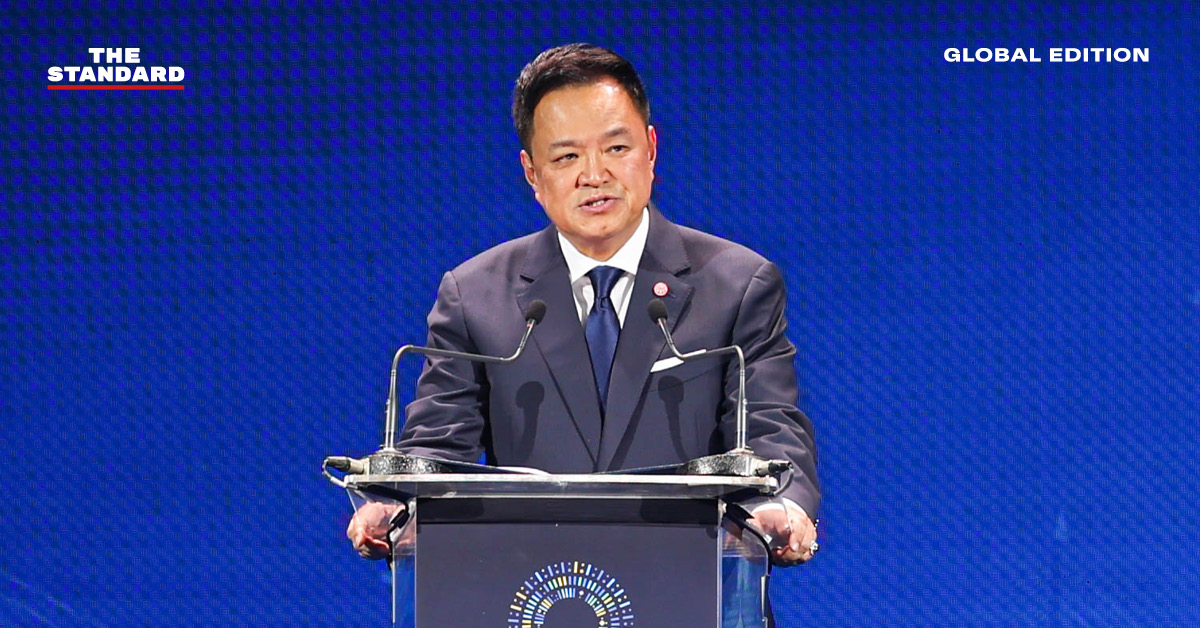
Meanwhile, Higher Education, Science, Research and Innovation Minister Yodchanan Wongsawat argues that Thailand should focus on being self-reliant and build out its own AI capabilities rather than choose between the two super powers.
Zooming Out
Thailand has walked the fine lines between the United States and China before, and in the increasingly fractured geopolitical landscape, countries are tasked to navigate between the divided lines of different superpowers. If the US’s threat to choose sides materializes and spills over into trade demands, then Thailand will find itself between a rock and a hard place.
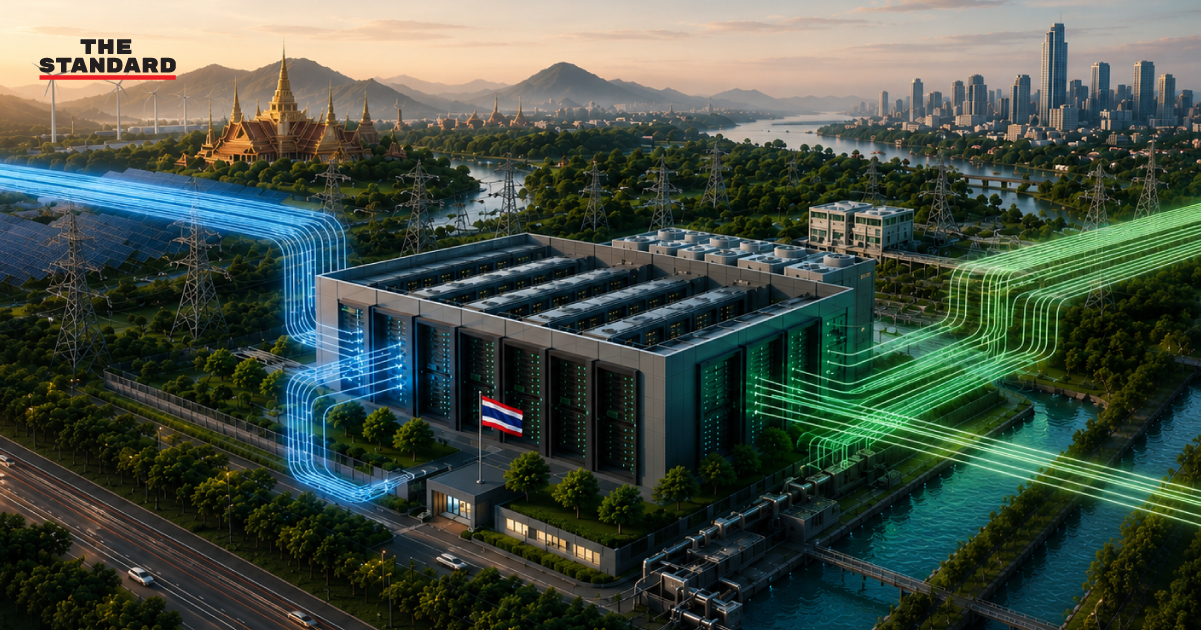
Thailand’s non-alignment is a policy directive from the top, as the country aims to navigate choppy trade conditions and other complexities between the superpowers. In this context, self-reliance may sound ideal on paper, but harder to enforce in practice, especially when we have a deep-tech labor shortage, an aging population and no clear directive on pushing ahead with AI development beyond housing brand-name data centers.
Thailand has to tread carefully. In July, Prime Minister Anutin made an official trip to China and visited Huawei’s Innovation Centre, in addition to welcoming China’s initiative to establish the World AI Cooperation Organization (WAICO) in a joint statement.
As Thailand itself lacks technological ownership, the country has to neutrally navigate the increasingly complex landscape of AI rivalry between the two countries, and exert diplomatic goodwill across other demands. Zooming out, choosing sides will ultimately be the most difficult for medium-sized countries such as Thailand, and ambiguity will become harder to sustain as a national policy. If it comes a time to choose sides, Thailand will have to decide how it will succeed at the chip layer, as this is a US export item.
The rivalry also comes as Thailand’s Deputy Prime Minister and Commerce Minister Suphajee Suthumpun prepares for an upcoming trip to Washington DC to lead negotiations on an Agreement on Reciprocal Trade, vowing that Thailand will not bend on three red lines, such as national security demands and full foreign investor ownership in ‘sensitive’ businesses.
The Key Takeaway
Artificial Intelligence is now at the center of the US and China’s superpower competition, and it has surpassed beyond merely a technology race to become an infrastructure of influence that spans power, talent and security with two distinct and competing AI supply chains.
As the US reportedly prepares to tell countries to pick sides, countries such as Thailand will have to navigate through increasingly competitive geopolitical landscapes, whilst continuing to build its own capabilities and set an achievable blueprint for self-reliance in some shape or form. As key government figures have publicly committed to non-alignment, Thailand will have to move ahead with this stance across key areas of technology, trade and commerce for the time being. Ambiguity will become a more significant challenge as rivalry between the two powers intensify.
THE STANDARD Global Edition is produced in collaboration with Bitesize Bangkok