The Nikkei Asia Forum APAC 2026 held in Bangkok on July 16 2026 brought together business leaders, policymakers and investors to exchange views and insights on Asia’s future. We heard keynote speeches from Deputy Prime Minister and Minister of Finance Ekniti Nitithanprapas, as well as Deputy Prime Minister and Minister of Foreign Affairs Sihasak Phuangketkeow, and insightful panels on the future of mobility, energy and economic landscapes across Asia-Pacific.
Key point
The full-day forum came amid challenging times for the world, and particularly for the Asia region, as countries continue to navigate the aftershocks of geopolitical tension and economic uncertainty, all while rapid technological advancement demands they upskill and catch up at speed.
The emerging theme of the forum was co-operation, and it’s never been more important for Asian countries to lean on each other for economic co-operation, collaboration and work towards regionalism.
Strengthening Thailand & Japan’s Relationship Through
Continued Co-operation
H.E. Mr. Otaka Masato, Japanese Ambassador to Thailand, delivered the opening remark at the forum, highlighting Thailand and Japan’s decades-long co-operation and collaborative relationship.
The Ambassador outlined key economic strategies, including Japan-Thailand’s LNG pact and Japan’s US$10 billion ‘Power Asia’ initiative to help countries combat the energy crisis. He also outlined
Japan’s ‘Free and Open Indo-Pacific’ vision, a commitment to work with Thailand and ASEAN countries to build a robust infrastructure primed for the AI era.
He pledged a ‘level playing field’ to protect Thailand’s automotive sector amid incoming disruption from AI. With automotive at the heart of Thailand and Japan’s decades-long diplomatic relationship, both countries will have to carefully navigate new demands of the landscape.
Ministers’ View on Thailand’s Shifting Role
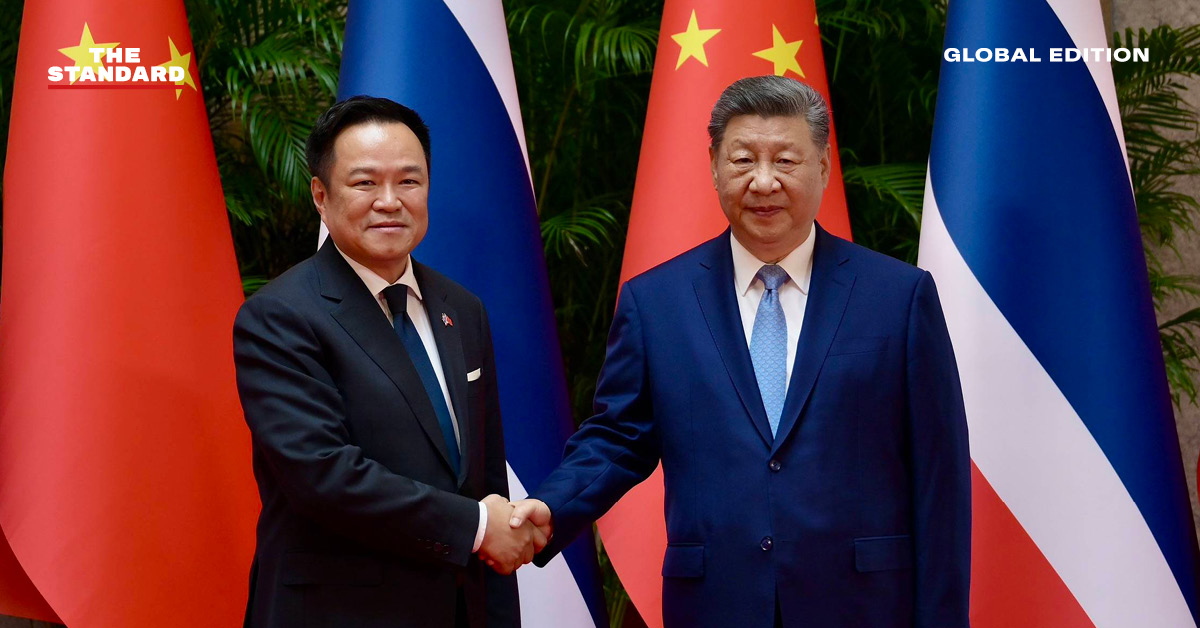
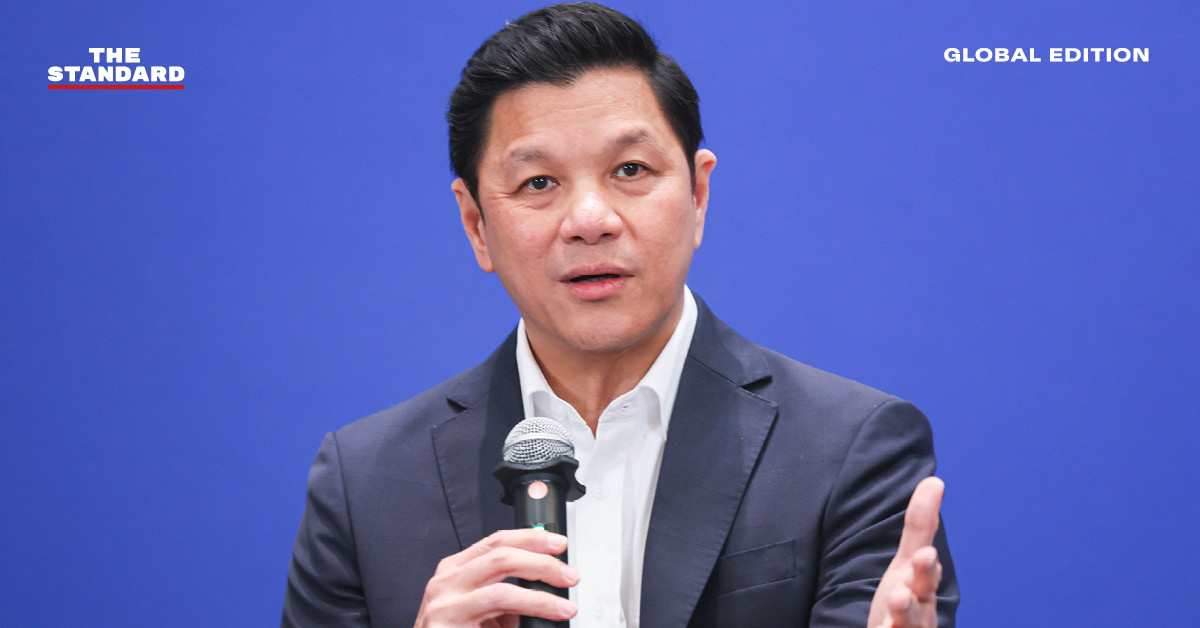
The forum also included special keynotes from Finance Minister Ekniti and Foreign Affairs Minister Sihasak, who addressed the shifting global order and what it demands of Thailand’s economic and diplomatic strategy going forward.
Ekniti outlined a macroeconomic agenda for Thailand with the intention of converting investment money into real, tangible growth for the Thai economy. This aligns with the government’s target of driving domestic investment up to 30% of the country’s GDP and the goal to raise GDP growth beyond 3%.
This, along with goals for a green transition, means Thailand will have to invest in strong infrastructure and a clear blueprint towards success.
“Our task is to turn investment intentions into operating businesses, stronger Thai suppliers, higher-value jobs, and higher incomes for the nation,” says Dr. Ekniti. “Thailand’s choices are clear. We will remain open, continue with economic structural reforms, and work closely with partners across Asia.”
Thailand is aiming for a larger role on the regional stage, especially when the country will host the upcoming IMF – World Bank Group Annual Meetings 2026 in October.
In line with the theme of openness, Foreign Minister Sihasak stressed the importance of Resilient Openness as a guiding theme for navigating choppy geopolitical waters. In this context, it means adapting to the changing global economy. Sihasak believes that globalization is actually being recalibrated, and that countries need to cooperate and work together as trusted partners.
ASEAN must remain a central pillar to drive economic growth, but the region must also adapt. Thailand will aim to bridge ASEAN and the region and become a trusted partner within the broader regional network through the Ministry of Foreign Affairs’ ‘economic diplomacy’ strategy.
In this context, Thailand is stressing openness and remaining a flexible partner across the region. This signals that the country isn’t choosing any superpower sides, and is betting on ASEAN neutrality as a value proposition for investment potential.
Asia in The Age of Polycrisis
We are truly in the age of Polycrisis, where geopolitical tensions, AI disruption, energy and climate volatility simultaneously compound, leaving a region like Asia to navigate through all the components at once.
In the panel titled ‘Asia’s Resilience Challenge for Sustained Growth in an Age of Polycrisis,’ panelists Yeap Swee Chuan (CEO, AAPICO HITECH), Petya Koeva Brooks (Deputy Director of Research, IMF) and Dr. Pavida Pananond (Professor of International Business at Thammasat Business School) talked extensively about Asia’s shifting role.
All panelists say that Asia remains the “main engine of the global economy,” but the next decade will be contingent on the ability to adapt and thrive amid superpower rivalry, polarization, AI and more.
Asia accounts for 60% of global growth and 60% of the global population, according to Petya. “The IMF forecasts that emerging Asian economies will grow by around 5% this year, significantly higher than the global average, driven by investment flows into AI and semiconductor technologies.”
Whilst Asia has predominantly relied on exports to fuel growth, ‘intra-regional markets’ could become as important as global trade faces fragmentation.
So here’s what Thailand has to navigate.
Dr. Pavida says that as a mid-sized country, Thailand must continue to coexist with both China and the US. The former as Thailand’s key trading partner and investment source, and the US as a key export market.
Crisis often fuels change and brings opportunity if navigated properly. This emerging set of crises is no different, but Thailand must be proactive in carving out its role.
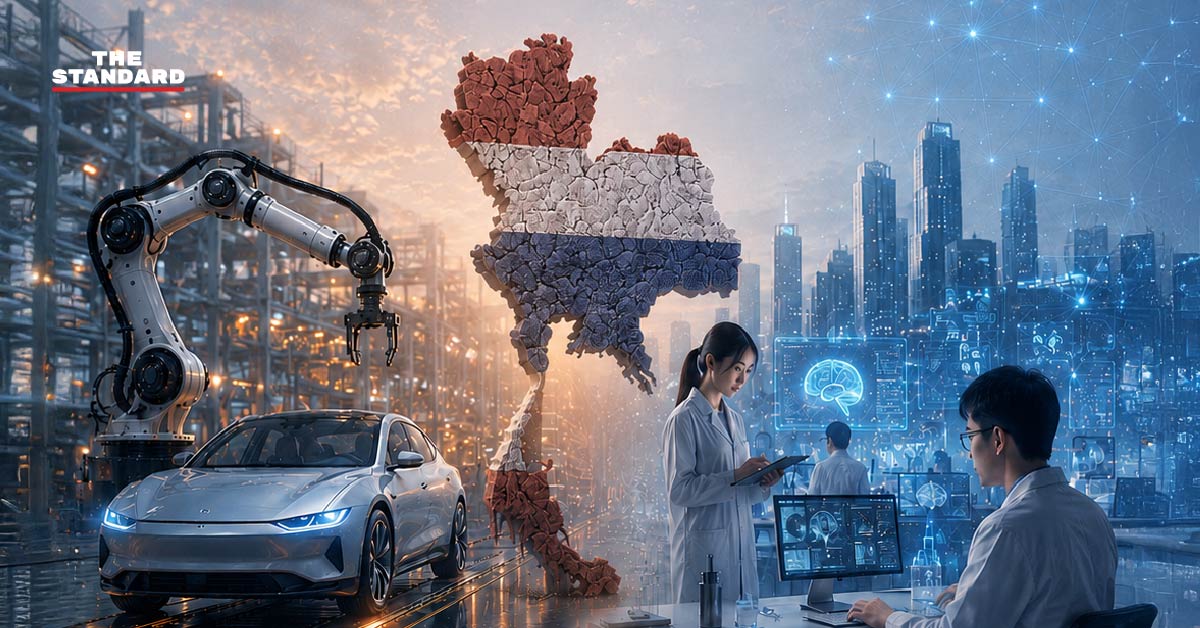
Using Thailand’s auto industry as an example, Yeap Swee Chuan notes that the country’s production capacity has fallen from 2.4 million vehicles to about 1.6 million. Chinese EV manufacturers now demand that Thai firms rapidly adapt new technology and carve out a role in the supply chain. Our past success becoming the ‘Detroit of Asia’ doesn’t guarantee success in the EV era.
“Competing on labor cost alone is no longer sufficient; future manufacturers must integrate technology, automation, and value-added services into production,” says Dr. Pavida.
Meanwhile, we must also be cautious about the AI hype. Whilst Artificial Intelligence is driving the global economy across investments in data centers and infrastructure, there’s a question of whether this will translate into meaningful productivity gains.
“If expectations run too high, a market correction could follow,” cautions Petya.
There’s a widening gap happening across pockets of the world. AI readiness will vary between countries, and only a handful of countries are structurally equipped to extract tangible value from the technology. From Thailand’s point of view, it’s important not to get caught up in the AI investment hype and to build a proper infrastructure so that the economy can benefit from the investments, whether it’s upskilling the population, placing regulations, and doubling down on technology transfer.
The Pressing Case For Carbon Neutrality: Where Does Thailand Fit?
Following the Strait of Hormuz’s disruption to global logistics and energy supply chains, the geopolitical conflict has exposed developing countries’ reliance on imported energy such as LNG. Thailand’s vulnerability, in particular, has been widely analyzed.
The panel on Future of Mobility and Pathways to Carbon Neutrality, placed Asia’s pressing need to move towards a greener future at the center, whilst still being realistic about the challenges ahead.
Thammasak Sethaudom, CEO of Siam Cement Group (SCG), said SCG prioritizes energy security above all else, and that the government consider establishing a ‘price stabilization fund’ for bioenergy to combat price volatility.
“The government should invest in upgrading the national power grid to support the transmission of solar energy from high potential areas to clean energy demand centers. Thailand has the advantage of year-round sunlight,” says Thammasak.
Whilst he supports the government’s push towards bioenergy and granting third-party access for power grids, clarity is needed on implementation.
Governments must take ownership when steering a country towards carbon neutrality. Masahiko Maeda, CEO of Toyota Motor Corporation’s Asia region, referenced Indian Prime Minister Narendra Modi’s support for the biofuel policy, which gave the private sector confidence to invest.
With rising competition from Chinese and Indian automakers in the region, Thailand needs clear policy direction, especially as the auto industry accounts for roughly 10-11% of the country’s GDP and employs nearly a million people across its supply chain, a point Toyota’s Asia CEO Masahiko Maeda raised directly at the forum.
Pivoting towards a greener future isn’t all about innovation and making the switch; costs remain a pain point. Previously, Toyota partnered with SCG Group and JWD to trial hydrogen-powered trucks in operational areas, but the project collapsed within a month, citing high hydrogen costs.
Thailand’s clean-energy ambitions are timely, but the path towards carbon neutrality will require cost absorption, infrastructure, and equal political will as much as the technology itself.
Key Takeaway
The Nikkei APAC forum made one thing clear: Asia will play an important role in the evolving world order, where resilience and regionalism will be key to navigating choppy waters. However, countries like Thailand can no longer rely on their existing playbook of exports, cheap labor, and tax breaks. We are hitting the right rhetorical notes and paving the path towards future industries, from EV to AI, but the real test for the government will remain policy clarity and execution.
THE STANDARD Global Edition is produced in collaboration with Bitesize Bangkok