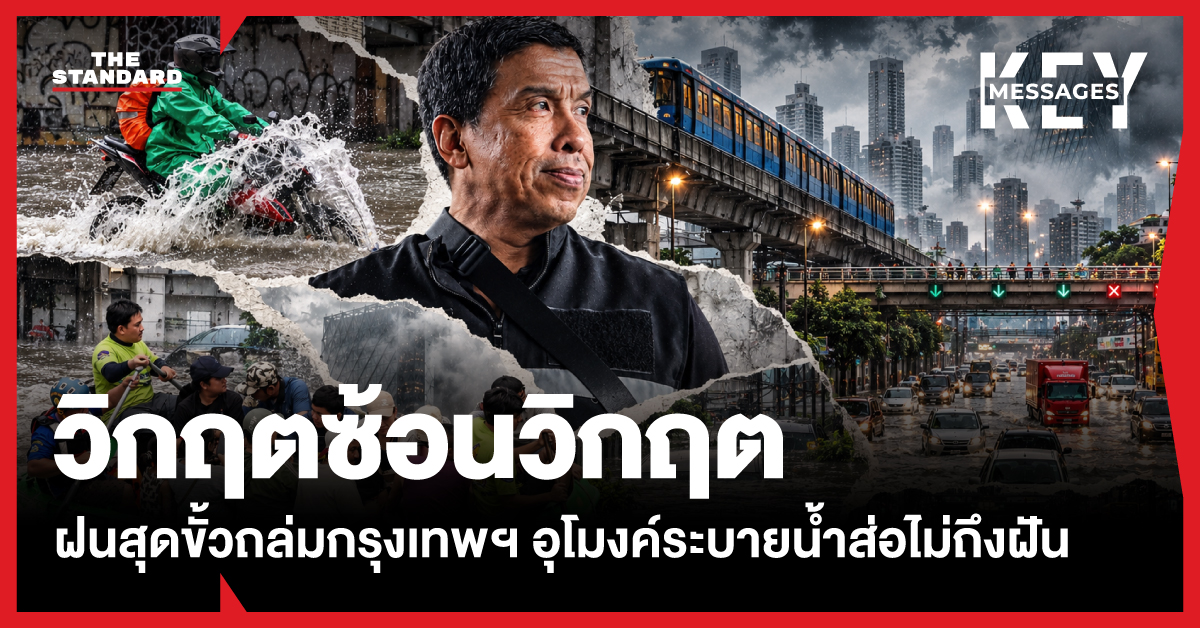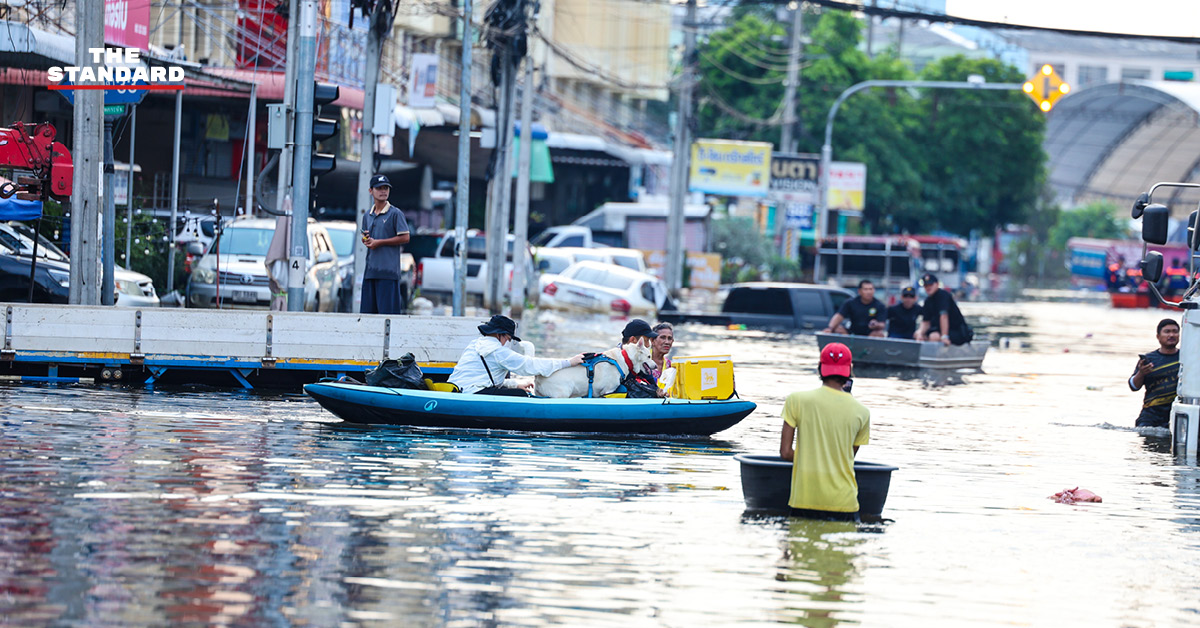






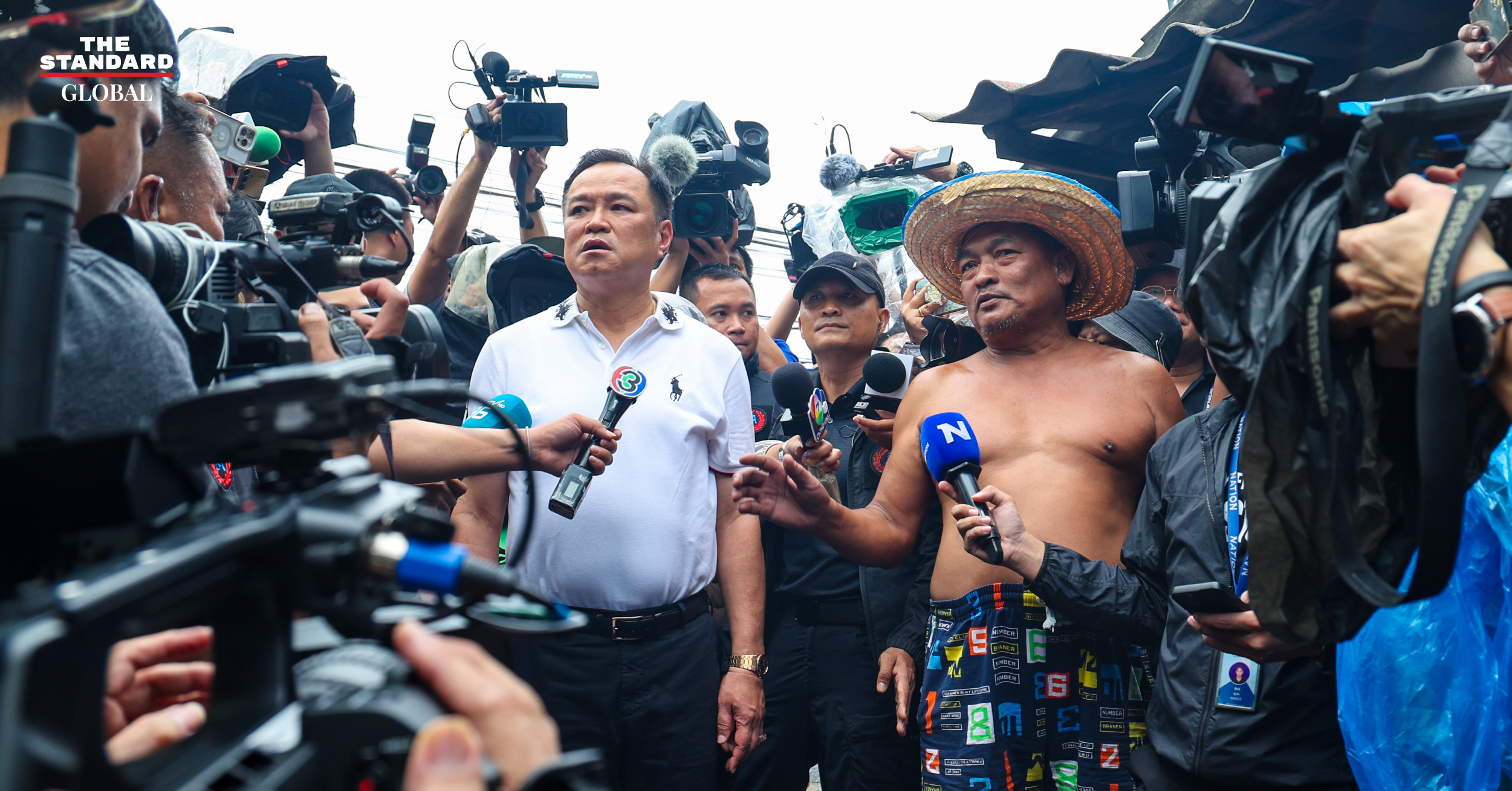
During Bangkok’s recent flood crisis, Prime Minister Anutin Charnvirakul was photographed barefoot, wading through floodwater in the city’s Sai Mai district and, more controversially, handing cash from his own pocket to flood victims. Anutin defended the gesture, saying he had resorted to handouts only because his team had run out of relief packages.
Criticism of the flood response grew online, but the latest NIDA poll suggests support was wavering prior to the floods. The survey, conducted nationwide between September 18 and 23, found support for Bhumjaithai had fallen to 12.1 percent in the third quarter, from 26.6 percent in the first. Anutin’s personal rating dropped to 13.8 percent from 29.4 percent over the same period.
The NIDA poll, often treated as a barometer of public sentiment, suggests that while Bhumjaithai’s grip on power remains firm, the party faces a deepening credibility crisis, compounded by growing distrust in the blue regime, allegations of corruption, and broader discontent as economic growth remains limited.
Interestingly, support for Pheu Thai rose to 18.4 percent in the third quarter, up 6.40 percentage points from the first quarter.
One of the government’s biggest controversies came last month, when the Election Commission voted not to prosecute 21 people, mostly Bhumjaithai leaders and executives, including Anutin himself, in a long-running case over alleged collusion in the 2024 Senate selection and cleared them of allegations that they helped candidates win seats, producing a Senate majority widely seen as aligned with Bhumjaithai. Meanwhile, the EC referred 77 other people involved to the Supreme Court, including 26 senators.
The ruling drew sharp criticism, but the government quickly returned to business as usual and kept its distance from the case.
Unease over the case now extends beyond the opposition. At a forum hosted by the Royal Society of Thailand last month, senior legal figures, a former Constitutional Court judge, a former Supreme Court justice and a former anti-corruption commissioner, publicly questioned the Election Commission’s handling of the case. This public criticism carries weight because Bhumjaithai’s strength has steadily become the preferred vehicle for Thailand’s pro-establishment network, an alliance of senior bureaucrats, military figures, and business elites that has long shaped the country’s politics from behind the scenes.
Meanwhile, on 8 October, the opposition led by People’s Party leader Natthaphong Ruengpanyawut filed a no-confidence motion against the prime minister and 17 other cabinet ministers. It accuses what it calls the ‘blue regime’ of undermining democracy and extending its influence over the Senate and independent oversight agencies. The Senate collusion case sits at the heart of the motion.
No-confidence debates are routine in Thai parliamentary life. However, its focus on the ‘blue regime’ questions the system that keeps the government in power.
It’s important to understand how high Bhumjaithai’s popularity rose and how support for the party skyrocketed during Thailand’s border conflict with Cambodia.
“The party gained a lot of public support during the border conflict,” said Ponlawut Songsakun, features editor at THE STANDARD. “It also won early credibility for reviving the Khon La Khrueng scheme and for appointing technocrats such as Finance Minister Ekniti Nitithanprapas, Commerce Minister Suphajee Suthumpun and Foreign Minister Sihasak Phuangketkeow to key ministerial posts. But the novelty quickly wore off.”
What followed instead was a swift return to familiar politicking. The government inherited an ailing economy, with high household debt, sluggish growth and a global energy crisis that exposed weaknesses in Thailand’s infrastructure. But it has also stumbled on its own, from a perceived softness on corruption and the grey economy to the recent social media fury over an MP whose declared net worth of Bt1.9bn raised eyebrows and drew scrutiny of her husband’s alleged links to cryptocurrency.
Fast forward to now, with the floods still fresh in memory, the public no longer sees cash handouts and on-ground visits as enough. As Thailand struggles to catch up with regional peers and economic growth slows, even Khon La Khrueng, which won the government early goodwill, has done little to cushion the blow.
Bhumjaithai and Anutin may have long enjoyed conservative backing, but the party can’t afford to dismiss its falling popularity casually.
“On several occasions when this government has faced a crisis, mainstream media have carried comments from people who say they voted for Bhumjaithai in the last election and now regret that choice,” said Ponlawut. Bhumjaithai may have consolidated its grip on power, but the real test will come at the polls. If the lack of trust persists, the next election will be hard for them.
The latest NIDA poll shows that public sentiment toward Bhumjaithai and the Prime Minister has shifted. The government faces mounting economic strain, with household debt at 85.2 percent of GDP as of June 2026, alongside a string of scandals. Since the poll, criticism of the government’s on-the-ground flood response has increased pressure on its reputation.
Speaking on THE STANDARD Now on 29 September, Asst. Prof. Dr. Sitang Pilailar of Kasetsart University’s Department of Water Resources Engineering argued that the problem was not leaders’ presence on the ground, but their grasp of how the system works.
“I’d like everyone in a leadership position, from the prime minister to deputy ministers, to understand how public administration works, given that there are laws and regulations to it,” she said. “Don’t apply ordinary state administration rules during a crisis like this. There has to be a clear understanding of the division of roles and responsibilities.”
The show’s host, Chainon Hankireerat, raised a counterpoint; had Anutin stayed away, he would have been criticized for being an absent leader. The real question, then, is what we should expect of a leader in a crisis.
The qualities that once drew support to the party, its nationalist credentials and appeal to conservatives, are now being overshadowed by headlines and controversies surrounding its members and networks, including allegations of corruption.
For now, though, Bhumjaithai’s hold on power is secure. From its Senate allies to its extensive network and control of the wider political machine, poll numbers cannot take that away. However, credibility and public trust matter, and winning back trust in the next election will be a true test for the blue regime.