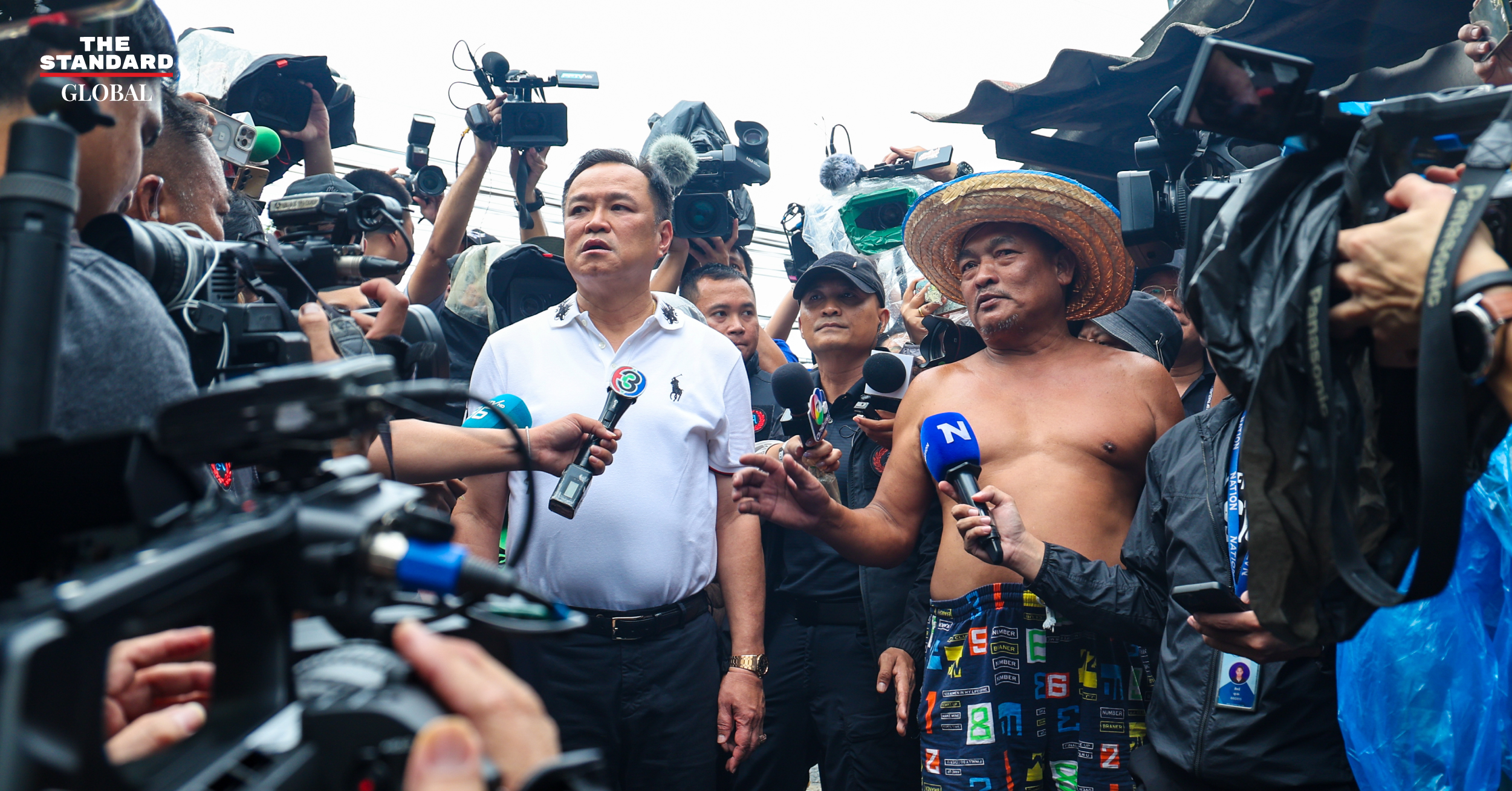


After the initial postponement of the no-confidence debate, Prime Minister Anutin Charnvirakul says the debate is unlikely to be held until December, citing conflicting ministerial schedules and travel abroad.
“The cabinet had been ready this week, but the opposition wouldn’t agree to go ahead, so we didn’t know what to do,” the Prime Minister said to reporters on Monday 26th October.
He also questioned the need for a five-day no-confidence debate. “If you’ve done the work, one or two days is enough, or even ten minutes will do. If someone has committed wrongdoing, there should be evidence; don’t just ramble.”
If further negotiations fail, House Speaker Sophon Saram has the final say, and the Prime Minister says the government would accept his ruling.
On the same day, Sophon addressed the press and confirmed that both sides have now agreed on a format of four days of debate plus one day for the vote. While the government proposed holding the debate this week, the opposition argued it needed time to prepare materials. The House Speaker will now write to the cabinet to set firm dates for the debate.
“I am the guarantee. You have the Speaker’s word that the debate will happen,” Sophon said. “Censure debates are how parliament holds the executive to account.”
Beyond the Calendar Pushback
This was not a one-time incident. Last week, opposition whips walked out of a meeting with government whips for the second time, following disagreements over scheduling dates for the no-confidence debate in parliament. The government proposed a four-day debate from 26 to 29 October, with a vote on the 30th. The opposition wanted five days of debate and a sixth day for the vote, scheduled in November.
November now looks unlikely, with December floated as the earliest option, though no dates have been confirmed. The debate would be Prime Minister Anutin’s first censure test in parliament since the February 2026 election returned him to power at the head of a Bhumjaithai–Pheu Thai coalition. The motion, filed earlier this month, targets Anutin and 17 Bhumjaithai ministers while sparing Pheu Thai entirely.
The five-party opposition, led by the People’s Party and including the Democrats, has framed the debate as a probe into the ‘Blue Regime’, referring to Bhumjaithai’s alleged grip on power and on state institutions that are meant to stay independent. At the core of the no-confidence censure is the 2024 Senate election, which critics say helped deliver a Senate majority aligned with Bhumjaithai. Last month, the Election Commission declined to prosecute 21 people in the case, mostly Bhumjaithai leaders, while referring 77 others to the Supreme Court.
The Opposition plans to meet on Wednesday, 28th October, to discuss the debate schedule.
Public Crisis of Confidence
Bhumjaithai’s grip on power remains secure, but its grip on public trust has shown cracks. NIDA’s September poll found Bhumjaithai’s support had fallen to 12.1 percent in the third quarter, from 26.6 percent in the first, while Anutin’s personal rating dropped to 13.8 percent from 29.4 percent.
Thailand’s limited GDP growth of 2.1% and macro-level problems, from structural challenges to the country’s high household debt, weigh on any government’s performance. However, Bhumjaithai has also faced high-profile scandals involving its party members, including an MP’s husband’s alleged ties to an online gambling business, which have affected public perception.
Looking Ahead
Though often seen as a necessary tool of democracy, the no-confidence debate rarely threatens a government with a solid majority.
Anything can happen in Thai politics, though, and the prime minister himself has fuelled speculation by declining to rule out Kla Tham joining the coalition as a third partner during a session on NBT’s Talk with Anutin’s Cabinet program.
Regardless of the debate’s outcome, and however familiar Thai politics may be, an elected government depends on public trust. Credibility carries a government to the next election.