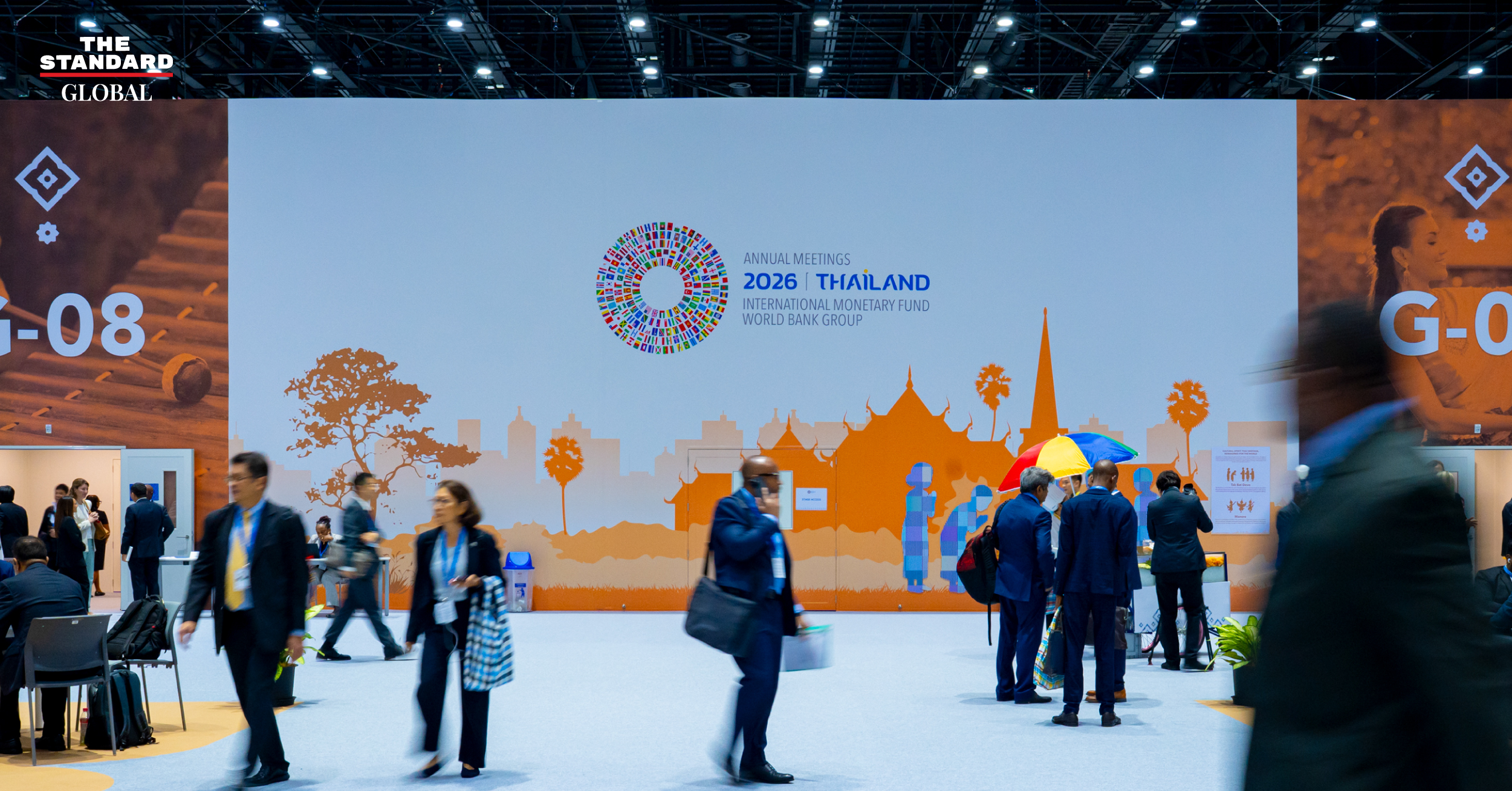
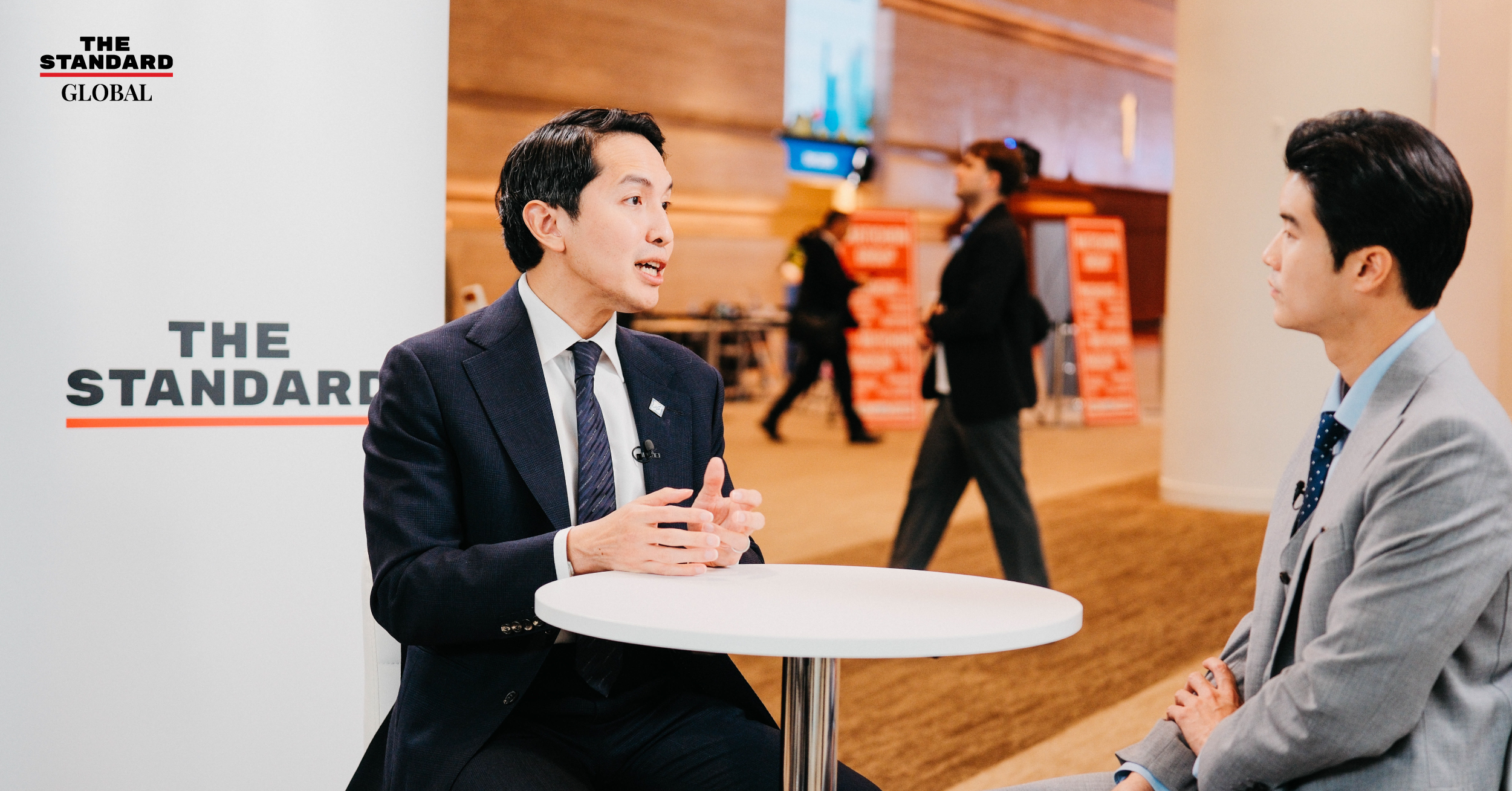
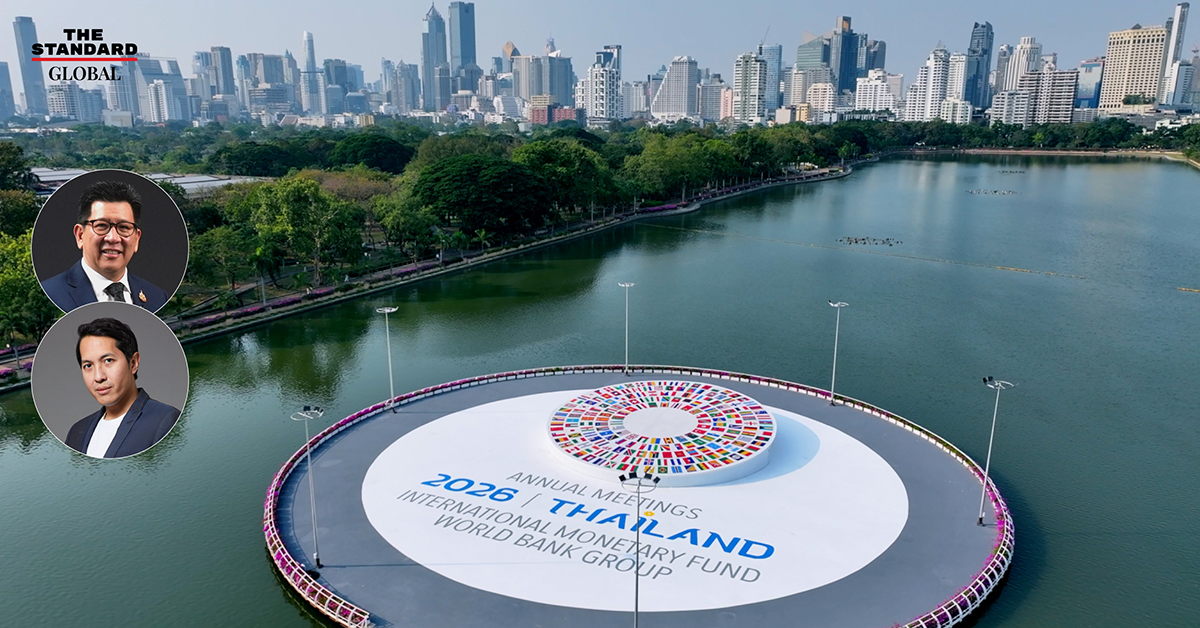
In an exclusive interview with THE STANDARD, Ajay Banga, President of the World Bank Group, discussed the importance of prioritizing jobs for young people amid rapid technological acceleration and the AI boom.
Key Point
“It could be as an entrepreneur, or as a small farmer. But a young person needs both hope and optimism, and the earning capacity to lead a good life and look after their family. We must help them have hope, optimism, a good income, and a good life.”
AI can transform the global economy, and in many ways it already has. But it could also widen the gap between high-income and developing countries. Asked where Thailand stands in all this, Banga said the country has benefited from the data center construction boom.
“In a way, Thailand has got some of the downstream impact of the development that is going on in large language models (LLMs) and data centers. My request to you all in the emerging markets of the developing world is to think about this differently. In reality, large language models require computing power, lots of electricity, lots of data, people who understand how to use all that, and lots of capital. Very few emerging markets have the combination of those five things.”
For Banga, emerging market economies should focus on AI applications, such as Indonesia’s health clinic initiative, which has one nurse, one medical diagnostic practitioner, and one midwife, and connect them with technology to support early diagnostics across the country.
Beyond that, Banga also emphasized “infrastructure and simplification of good governance” as key to growth in this era. Micro, small and medium enterprises (MSMEs), which account for 75-80 percent of jobs in ASEAN, need structured access to capital, digital connectivity and advisory services.
“It’s not just about AI; it’s about the basic fundamentals of a working economy,” says Banga.
For the World Bank President, Thailand’s opportunity lies in focusing on key sectors, such as agribusiness, digital services, tourism and entrepreneurship for the young generation.
“From the viewpoint of an economy like Thailand, agribusiness and tourism are key to growth. AI cannot replace tourism; you cannot replace a guide or a hotel manager,” he says. “You cannot replace the culture and the values of a country like this.”
It’s worth thinking about things a bit differently and focusing on sectors where AI does not have an immediate impact.
“Upper middle income countries may see AI’s impact on jobs at 12%, compared to 20-30% in developed economies,” he says. “It’s not as difficult as it appears.”
The IMF’s flagship World Economic Outlook 2026 report
Day two of the IMF-World Bank Annual Meetings in Bangkok was headlined by the release of the IMF’s flagship World Economic Outlook report for October 2026. Under the theme of ‘Resilience Under Strain, Urgent Choices,’ the IMF projects global growth of 3.1 percent in 2026, down from 3.5 percent in 2025, before picking up to 3.4 percent in 2027.

Beyond the headline numbers, two major shifts are worth watching. First, global growth is concentrating in a handful of countries. The IMF calls this a ‘Split Global Economy,’ pulled in opposite directions by two forces: the Middle East conflict driving up energy prices, and a wave of AI investment driving growth. The second shift suggests the world’s capacity to absorb shocks is running out.
IMF raises Thailand’s GDP forecast to 2.1%
During this morning’s report briefing, the IMF revised Thailand’s growth outlook for 2026 and 2027 to 2.1 percent; however, the country still trails behind ASEAN peers. Although this is an upgrade from the initial 1.9 percent in July, Thailand remains the slowest-growing economy among ASEAN-5, with an average growth rate of 4.4 percent.
Malaysia is projected at 5.2 percent, Indonesia at 5.1 percent, Singapore at 5 percent, and the Philippines at 3.4 percent. Vietnam, outside the ASEAN-5, is set to grow in a league of its own at as much as 8.4 percent.
The IMF attributed the upgrade to emergency fiscal measures and technology exports, noting that Thailand is one of the world’s four largest net exporters of AI hardware.
In an exclusive sit-down with THE STANDARD, IMF Chief Economist Silvana Tenreyro says Thailand’s economy is resilient, with inflation stabilizing, but the country remains exposed to global energy price volatility and extreme weather patterns.

“Thailand’s 2.1% growth is supported in part by the integration into Asia’s AI supply chain,” says Tenreyro. “Going forward, Thailand should invest in AI skills, digital infrastructure, renewable energy transition and work towards a diversification of trading partners, and consider supply buffers in the form of inventories.”
As for advice for the next generation, getting engaged with the world is arguably the best thing going forward.
“They can find the solution to how to make AI gains more inclusive and shared across the whole of Thailand,” she says. “Future leaders can think about how to engage young people and ensure they have a place in the labor market.”
AI-driven skill replacement is one of the most important topics coming out of this week’s meetings. For Tenreyro, it’s difficult to see whether AI will replace or complement various skills.
“It will probably be a mix of the two,” she says. “Depending on the sectoral composition of the economy and the types of tasks. So, the more complementary skills, the better, because it will contribute to higher employment and higher wages.”
Thailand’s Path towards resilience
During a panel titled ‘Building Resilience in a fragmented world,’ Finance Minister Ekniti Nitithanprapas discussed Thailand’s role in building resilience.

“It’s a K-shaped impact. Thailand is in the middle, and we can be trusted connectors linking big countries with small ones. However, we need to build trust locally first, by linking international investment to people on the ground. We receive a lot of FDI, and we are lucky to be in the AI supply chain, but we need to turn those investments into local capabilities and upgrade our competitiveness. That means linking local supply chains to global ones and reskilling our workers through initiatives such as Skills Bridge. Under our FDI incentives, we require each investment to link to the local economy and local universities. We need to turn capital into capabilities.”
Key Takeaway
The sharp focus on what AI could potentially mean for the labor force has made upskilling and job creation a key theme of the 2026 IMF-World Bank meetings. This is something that’s at the core of Finance Minister Ekniti’s ‘capital into capabilities’ argument for Thailand: investment cannot trickle in without the promise of turning into tangible economic opportunities for Thailand.
As World Bank President Ajay Banga and IMF Chief Economist Silvana Tenreyro note, the young generation must engage with the world and seek creative opportunities that add value, whether in tourism, agribusiness, or at a more local level.
As AI continues to transform how we live and work, countries must invest in strong infrastructure, ensure good governance, and make sure the next generation isn’t left out of the competitive labor market.