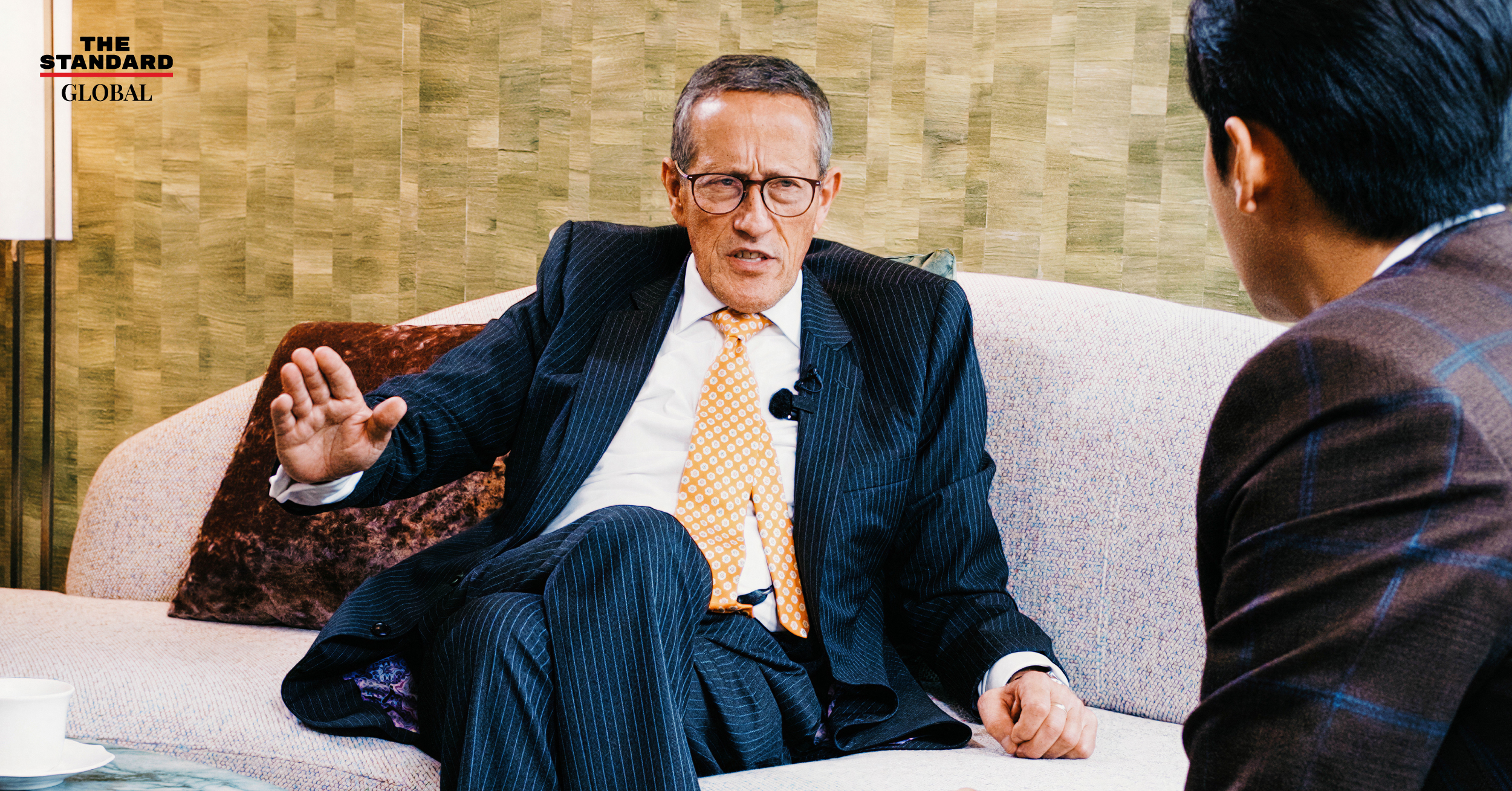


When Thailand hosted its first IMF-World Bank Annual Meetings in 1991, the economy was growing at 8.1%, with an A- S&P rating. Fast forward to now, thirty-five years later, the meetings have returned to Bangkok, but the landscape is vastly different.
Key Point
The world has become fragmented, worn down by geopolitical conflicts and rising macro challenges. Thailand itself looks vastly different, with 2% growth and a rating that has slipped to BBB+.
However, a recent shift suggests Thailand may be able to become cautiously optimistic. The meetings have brought renewed attention to Thailand, with investor commitment and foreign inflows returning to Thai equities.
Whether this renewed attention becomes lasting investment and wakes a drowsy economy remains an open question. In sit-downs with THE STANDARD, leading voices from global finance, capital markets, and banking confirmed the rising interest but cautioned that policy continuity and political stability will determine whether it lasts.
Market Sentiment Rises, but Continuity Is Key
“There has been a significant uptick in foreign investor interest in Thailand,” says Asadej Kongsiri, President of the Stock Exchange of Thailand (SET). “Last year, foreign investors pulled about 100 billion baht out of Thai equities. This year, net inflows reached about 70 billion baht.”
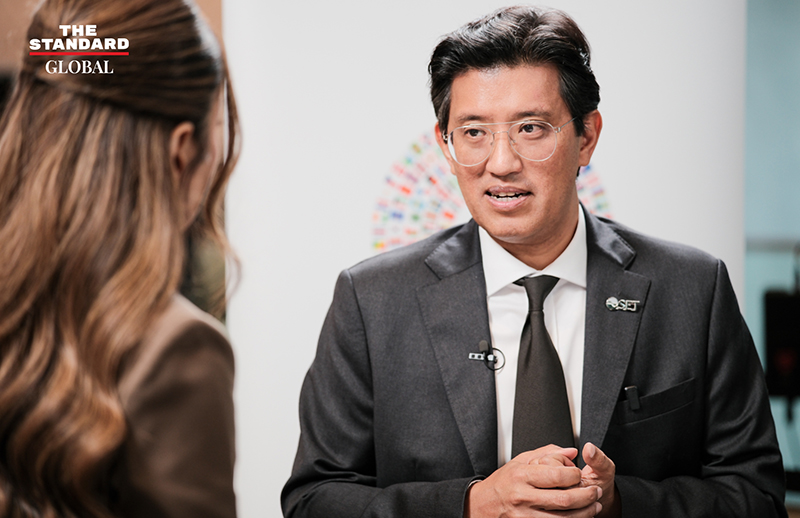
For Asadej, Thailand stands to benefit from an increasingly fragmented world. “Our neutrality benefits us amid the divide, and we have a stable supply chain and infrastructure.”
Ultimately, capital markets are driven by fundamentals. In this sense, if real investment arrives and earnings follow suit, it creates what Asadej calls a “snowball effect” for the entire chain.
In this sense, fundamentals can also refer to Thailand’s governance and political stability. According to Asadej, sustaining momentum after the meetings will depend on the government delivering on policy and showing tangible results.
“Proactive communication is key,” he says. “Thailand must communicate both good news and bad, to show it can manage a crisis.”
Beyond that, the government must deliver on policy, with concrete evidence that investment is materializing on the ground and producing measurable results.
“The real trigger was the election,” he says. “Investors saw a chance for a stable government that could last long enough to deliver policy. That’s what they want to see continue.”
Actions speak louder than words, and investors will also watch how regulations are shaped and implemented for data centers, AI, and other forward-looking technologies.
“There are people preparing to invest in Thailand,” says Asadej, “Making it actually happen is what matters most. When will policies be delivered, and where’s the evidence? That’s the real challenge.”
Asia Will Compete For AI Investments
J.P. Morgan executives also pointed to Thailand’s government stability as key to attracting meaningful investment.
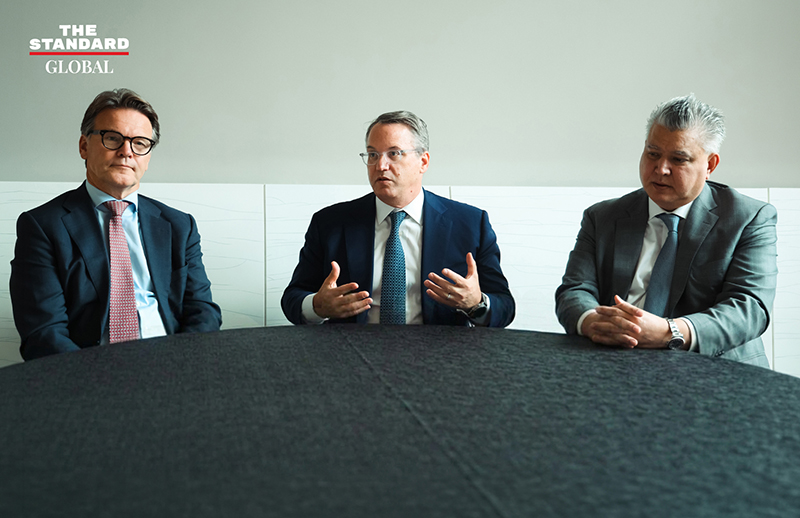
“A stable government and consistent policies are important for attracting investment and supporting economic growth,” says Marco Sucharitkul, Senior Country Officer for J.P. Morgan Thailand.
Amid competition among Asian countries, J.P. Morgan points to Thailand’s geographic advantages, active equity market, and neutral position among the superpowers, but countries are competing for that capital as Southeast Asia benefits from supply-chain diversification away from China.
Sjoerd Leenart, CEO for J.P. Morgan Asia-Pacific, noted that Asia accounts for about 40% of global GDP. By comparison, it is growing roughly four times faster than Europe and twice as fast as the US.
Capital, however, is concentrated in economies with an AI and hardware industrial base, notably Japan, South Korea, Taiwan and parts of China.
Economies still more reliant on traditional industries, such as Thailand, India and the Philippines, must compete harder for investment.
Vietnam benefits from consistent five- to ten-year economic development plans. Malaysia benefits from its proximity to Singapore and political stability.
The IMD World Competitiveness Ranking 2026 places Singapore 1st, Malaysia 15th, Thailand 26th and Vietnam 27th out of 70 economies.
Looking ahead, Thailand should invest selectively in industries suited to the country’s resources and capabilities, instead of trying to compete with Taiwan and South Korea across every category of advanced chip technology.
BOI data for the first half of 2026 show that foreign investment applications reached about 1.37 trillion baht, up 80%. Major commitments came in digital industries, data centers and electronics.
Whilst this is a positive sign, “it remains to be seen how much of this investment will translate into real economic benefit.”
He noted that large projects take three to four years to build out their infrastructure. Investors therefore prize long-term policy certainty.
Looking beyond the IMF-World Bank Annual Meetings, Leenart says hosting could create future opportunities for Thailand, even if it doesn’t show up in GDP right away. Success, it seems, depends on Thai industries’ readiness, workforce readiness, and continued economic policy.
Connecting the Dots With Data
For Payong Srivanich, Chairman of the Thai Bankers’ Association, collaboration and data sharing between the state and the private sector are key to addressing investors’ concerns about policy continuity.
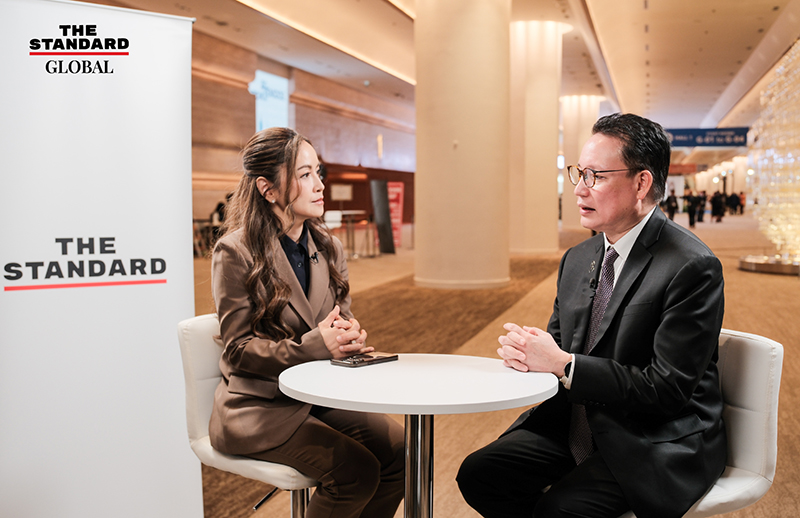
He says the starting point is connectivity, breaking down silos between government and business so better data can pinpoint where challenges lie.
Connected data would also show whether investment is real; for instance, comparing BOI approvals with actual output so capital and talent flow to sectors that are genuinely growing.
“Thailand’s informal economy accounts for as much as 48% of the total,” he says. “By its nature, it doesn’t generate data. Technology lets us gather alternative data that shows how people behave, as if they were in the formal system.”
With collaboration and clear data, policymakers can more easily connect the dots and also help address transparency concerns.
Payong pointed to Thailand’s work on financial inclusion and SMEs, which the World Bank showcased alongside health cases. For him, these examples show that Thailand has real strengths to offer, and that other countries are now learning from its experience.
There is still work to be done. Thailand has gained momentum from hosting the Meetings; now it must do the work and deliver consistent policy as competition among ASEAN peers intensifies.