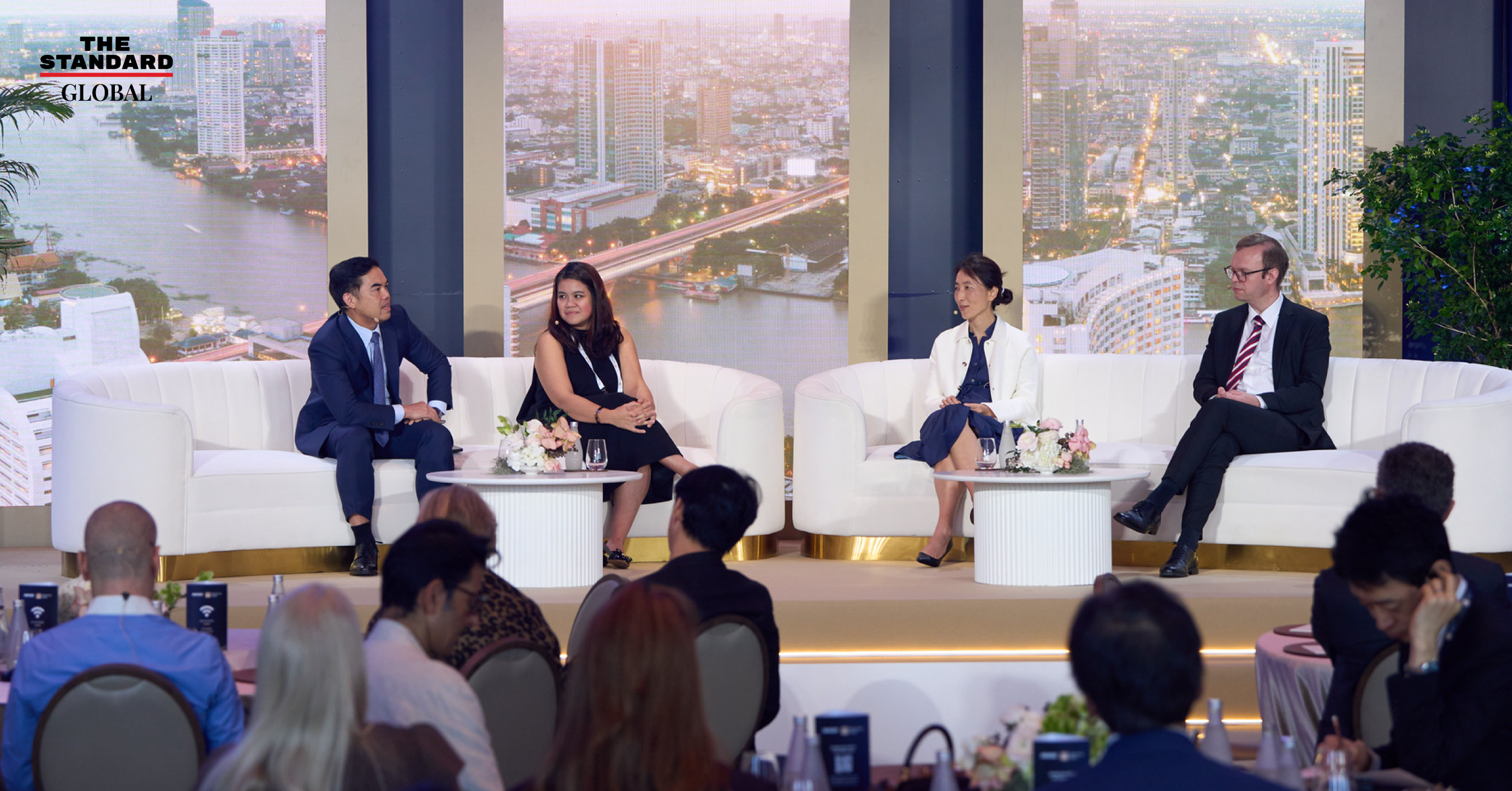


This past week, the world’s leaders, policymakers, and investors gathered in Bangkok for the 2026 IMF-World Bank meetings, marking the first time in 35 years the city has hosted the meetings at Queen Sirikit National Convention Center (QSNC), the same venue used in 1991.
Key Point
The venue may be the same, but the world, and Thailand’s place in it, looks starkly different. This year, artificial intelligence dominated the conversation, from keynotes and panels to the sidelines. Throughout the week, discussions of skills displacement, job creation in the AI age, resilience, and global growth took place against the backdrop of significant structural shifts in the world order and geopolitical challenges. There is also lingering energy price pressure from the war in the Middle East, which will continue to weigh on growth.
The world has become more uncertain, and collaboration between countries has never been more important as fragmentation threatens to upend the world order.
Public debt is swelling worldwide and could potentially reach 100% of GDP by 2030. This, combined with inflation which is poised to remain stubborn, and shrinking fiscal space, governments and central banks will need to make careful and disciplined policy choices.
Thailand is navigating a challenging landscape, yet it aims to reform and advance toward future industries. According to the IMF’s latest briefing, Thailand trails the ASEAN region, with 2.1% growth projected for 2026 and household debt at 85.2% of GDP; after delegates leave, the main task is turning this week’s opportunities into tangible outcomes.
This week, much happened at the 2026 IMF-World Bank Annual Meetings, from discussions on AI and its implications to fiscal responsibilities and the future of work. This raised meaningful questions about Thailand’s place in a fragmented world.
Here’s our recap of what transpired, what was said, and what it means through a global lens.
Bangkok’s Week on The Global Stage
For the first time in thirty-five years, Bangkok hosted policymakers and influential figures for a week of panels, meetings, side events, and dinners that will help shape global economic policy.
For Thailand, it’s a chance to take stock of where we stand on the world stage and to identify our key strengths and weaknesses as the world grows increasingly fragmented. This time, we joined the global conversation. What we do with it is up to us.
AI Was The Overarching Theme
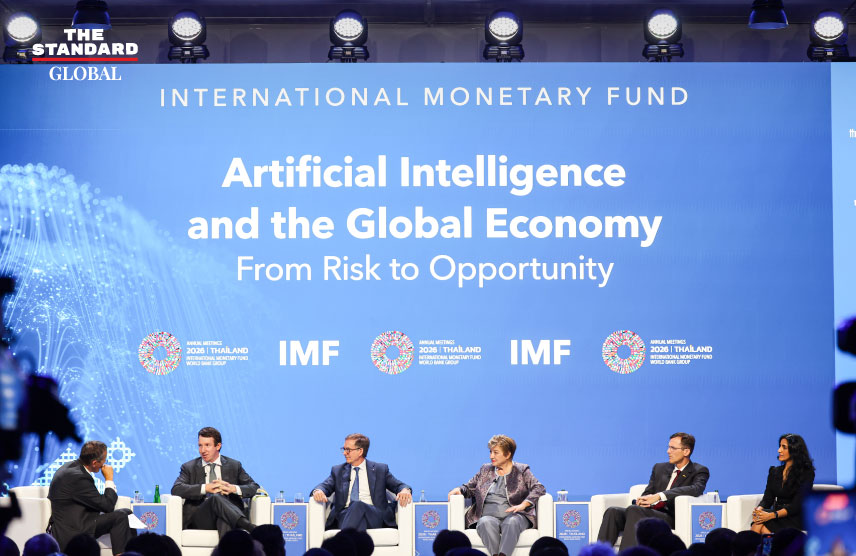
Artificial Intelligence recurred across many panels, with delegates and policymakers discussing concepts such as “Small AI” and job creation for future generations.
During the opening panel, “Small AI: More and Better Jobs” on 12th October, IMF Managing Director Kristalina Georgieva called AI a “slow-moving tsunami” that will affect roughly 40% of jobs globally over time, 60% in advanced economies and 23% in low-income countries.
Meanwhile, World Bank President Ajay Banga argued that developing and middle-income countries such as Thailand can use small, locally tailored AI across sectors such as agriculture, healthcare, and education, rather than relying only on expensive large language models.
The argument isn’t whether AI will drive growth, but whether developing countries will leverage the technology to build affordable, practical toolkits for real-world use. Beyond that, AI is currently propping up the global economy. AI infrastructure has single-handedly kept 2026 global real GDP growth above 3%, but it’s unclear how long it can continue to prop up the economy. The question is, whether productivity gains come fast enough to sustain this growth?
Thailand’s Aukeit Unahalekhaka, CEO of Thara Green, cited an example of how Durian farmers can use ChatGPT to assess weather patterns and send out marketing materials at no extra cost. Meanwhile, the World Bank cited clinic staff in Indonesia using AI to assess patients and reach doctors remotely, while farmers in India leverage AI to get better seeds, fertilizer, and crop insurance.
Banga argued that Thailand can leverage small AI initiatives across its core industries, from tourism to agribusiness, to boost productivity and economic growth.
Meanwhile, Thailand’s Minister of Finance outlined the government’s AI blueprint, anchored by three pillars: AI in All (improving existing jobs), All in AI (building capabilities and new jobs in future industries), and AI for All (ensuring that the AI benefits reach everyone). The Minister referenced the ‘Nok Krasip’ initiative, an AI tool for MSMEs that helps small businesses access financing and manage inventory.
Heard at The Meetings: From Upskilling to Resilience
One of the biggest takeaways from the meetings was Banga’s warning to future graduates and industries.
“In the next 10–15 years, 1.2 billion young people in developing countries will reach working age, but those economies are on track to create only about 400–420 million jobs.”
Meanwhile, the IMF issued a caution for Thailand.
“Protect people and not prices,” said Krishna Srinivasan, Director of the IMF’s Asia and Pacific Department, at the regional outlook briefing. He urged targeted help for debt-burdened households instead of broad fuel subsidies to preserve Thailand’s fiscal buffers.
On AI, Georgieva observed that we have ‘a world economy that is like on one leg,’ referring to AI as the main driver of global growth and heavily supported by the US, China and India, whilst countries such as Taiwan and South Korea, and to an extent Thailand, are beneficiaries. The risk is that the global economy could face significant headwinds if AI expectations fall short or if financial instability hits.
US Federal Reserve Chair Kevin Warsh sidestepped on interest rates, but noted that the global economy is showing resilience and is ‘hanging in there’amid ongoing energy shock and tightened monetary policy.
“ I came out of meetings here yesterday and today and it’s hard to be in a discussion with central bankers and not compare notes and hear the same thing about the surge in prices.”
Ultimately, inflation is a global challenge. This is worth watching for Thailand, as higher interest rates abroad can pull capital from emerging markets and raise borrowing costs.
On the foreign direct investment front, Finance Minister Ekniti vows to “turn investment into local capabilities,” establishing Thailand’s investment guidelines that FDI must come with tangible benefits for the broader economy and workforce.
What’s Next For Thailand?

This is arguably the most critical question. One thing is clear: a lot of hard work remains after the delegates leave, and Thailand will be tasked with holding itself accountable while turning opportunities into economic gains.
“Thailand needs to strengthen collaboration across government, the private sector, and academia. There’s a need for policy continuity; otherwise, we will never see long-term results,” says Dr. Santitarn Sathirathai, Vice Minister of Finance.
Once the tables are cleared and the delegates have left, the state and private sector will need a clear, shared blueprint, one that sets out agendas, schemes and initiatives aimed not only at riding the AI wave but at fixing deep-rooted structural weaknesses: easing household debt, overhauling outdated regulations and reskilling a workforce at risk of being left behind