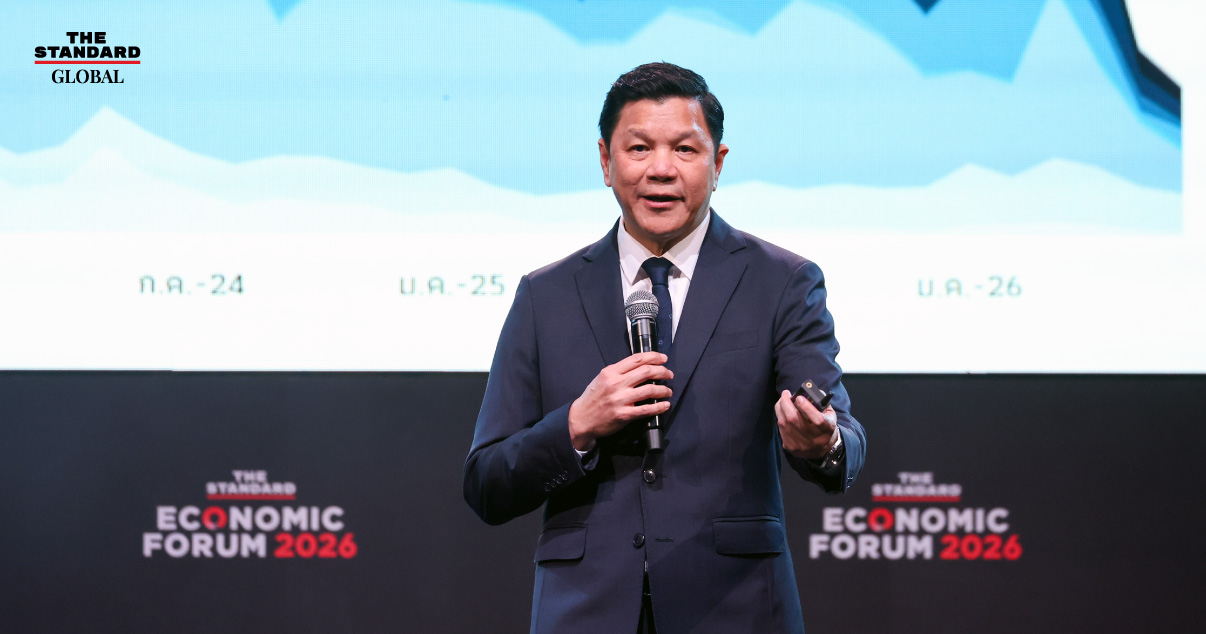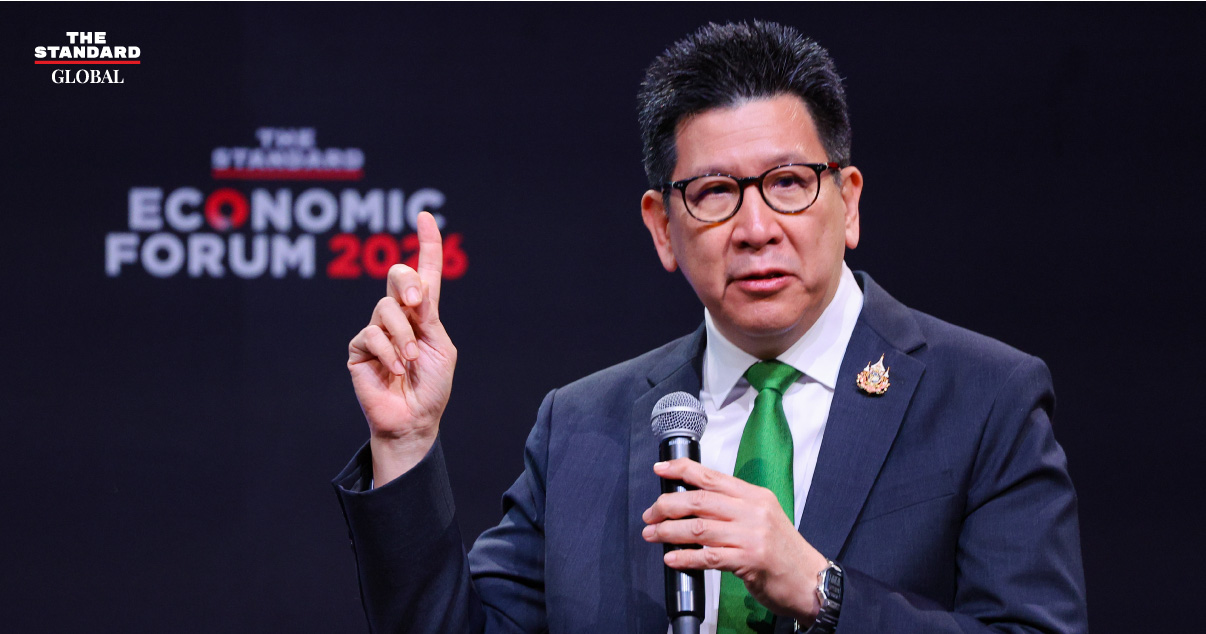


A recurring theme ran through four global perspectives presented at THE STANDARD ECONOMIC FORUM 2026 on November 4th, from the viewpoints echoed by the Ambassadors of Japan and the European Union, to the World Bank and political scientist Zhang Weiwei.
Key Point
Each viewpoint may have differed in context, but they all raised the same fundamental question: while Thailand has opportunities, how does the country turn investment opportunities into stronger business capabilities and long-term growth?
Japan stressed the value of Thailand’s established export industries, whilst the EU spoke of competition and high-value investment. From an institutional perspective, the World Bank called for productivity gains focused on small businesses. While each spoke from its own relationship perspective with Thailand, there’s a strong and pressing case for reinvention; we must act before all talks of AI-led growth pass the country by.
Thailand’s Next Phase For Exports
H.E. Mr. Otaka Masato, Japan’s Ambassador to Thailand, stresses the importance of Thailand’s position as an export hub.
Citing the automotive industry with longstanding Japanese ties, the sector sources more than 90 percent of its materials and components locally and supports over 80,000 jobs. However, this industry is cracking under pressure, with weaker exports and supply-chain disruption. Suzuki and Subaru’s exit from Thailand last year should serve as a warning of how Thailand must work to keep its export industry stable.
Whilst this reflects Japan’s stake in the automotive industry, Otaka’s warning raises a broader question for Thailand: how can the shift to newer technologies give existing suppliers and workers a place in the next industrial economy?
Whilst Japan continues to invest steadily across Asia, Thailand has slipped to fourth or fifth among Japan’s investment destinations as competition from India and Vietnam climbs rapidly.
“Vietnam is emerging as a competitor to Thailand for Japanese investment, alongside India, which is fast becoming a key player in global export value chains.”
The European View: Investment Outcome is Key
“Geography alone is not enough. Investment is mobile; investors have choices,” says H.E. Ms. Luisa Ragher, Ambassador of the European Union to Thailand, during her address.
While Thailand has clear advantages in manufacturing capabilities, infrastructure, and connections to regional supply chains, investors will weigh regulations, institutional standards, and the overall ease of doing business.
We’ve heard such stark warnings before, but the signals are becoming louder.
The Ambassador’s proposals therefore centered on domestic reform, from simplifying regulations to paving the way for new entrants to challenge incumbents and create a competitive economy.
She stressed the value of investment outcomes, measuring productivity, the number of skilled jobs created, and technology transfer, echoing shared sentiment heard during the 2026 IMF-World Bank Annual Meetings in Bangkok last month. Whilst the proposed Thailand–EU free trade agreement could help, market access can only help if there is meaningful reform at home.
Productivity is Key
Stephen N. Ndegwa, the World Bank’s Division Director for Thailand and Myanmar, placed productivity at the center of Thailand’s growth challenge.
Against a shrinking workforce, businesses and workers must generate more value from existing resources. Greater business dynamism, wider technology adoption and deeper economic integration are key.
The priority is to make it easier for businesses to launch, compete and expand at meaningful scale. Ndegwa called for lower regulatory burdens and fairer competition between state-owned enterprises, as well as closer scrutiny of mergers that could weaken market competition.
These points are directly applicable to Thailand, but implementing them will require a meaningful overhaul of the country’s infrastructure.
He echoed World Bank President Ajay Banga’s vision on Small AI, echoed during the 2026 IMF-World Bank Meetings, where the technology can be deployed to small businesses to solve real challenges.
Reinvention, in this case, is an economy where productive firms have room to grow, and smaller ones can get the finance, technology, and markets they need to catch up.
Investment-Led Growth
Political scientist Zhang Weiwei stressed the importance of high-value investment. He pointed to opportunities for cooperation in infrastructure, electric vehicles, renewable energy, AI, smart agriculture, and regional supply chains.
In line with others, he stressed that capital is not enough to stimulate meaningful growth.
“Chinese investment should not only bring capital and factory capacity; it should also help Thailand climb the global value chain,” he says.
To achieve this, local research and development, joint technical laboratories, and vocational training will have to go hand in hand, with a clear aim to transition from mere low-cost assembly to innovation-driven production.
One question should frame every investment thesis: how does a project deepen local expertise and skills, and help the country build capacity to produce higher-value products?
Thailand’s Future Path
These challenges may be well documented by now, but each global perspective expressed at the forum points to the pressing need to shift, reform, and reinvent the structural rules that have long been in place. From reducing regulatory barriers to increasing business competition and attracting high-value investment designed to upskill the local workforce, it’s becoming clearer that Thailand must pursue all these ambitions alongside each other, and all at once.
The world is not waiting for Thailand. Every reform on this list is fast becoming urgent, and the government must act to restore growth before the country falls further behind its regional rivals.