

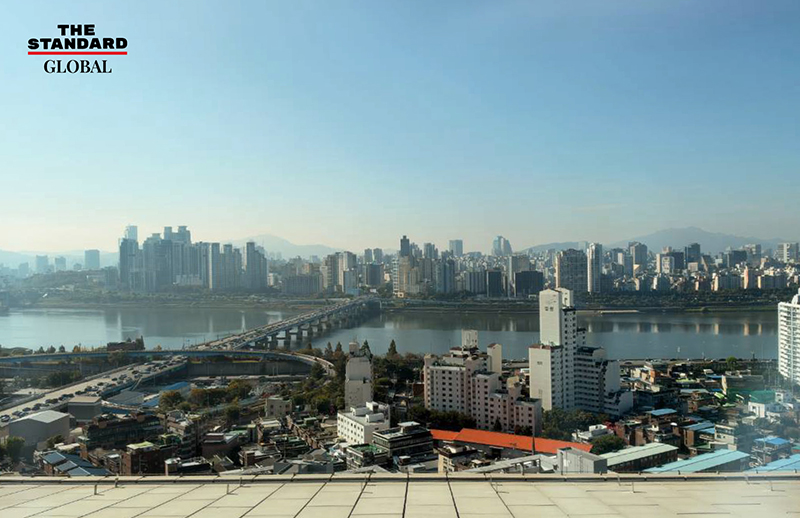
Standing on the 14th floor of a uniquely shaped, raw concrete building in Seoul’s bustling Seongsu district, a wide window framing the Han River and the tall towers of Gangnam beyond, a Gentle Monster executive is telling us about the brand’s visionary founder.
“He’s just like our name. Gentle and polite on the outside, but inside, he’s a monster.”
He’s referring to Kim Han-kook, who co-founded the iconic eyewear brand Gentle Monster in 2011. A former operator of English-language camps, Kim spotted an opportunity for oversized frames designed for Asian face shapes. He eventually turned the eyewear shop into an art space that people wanted to wander into, even if they had no intention of shopping for a new pair of glasses.
More than a decade later, IICOMBINED, the group behind Gentle Monster as well as fragrance and other product lines, posted 2025 revenue of roughly 19 billion baht.
I was in Seoul this week, traveling with a group of Thai executives to learn how South Korea builds global brands.
Throughout the trip, we spoke with executives at Olive Young, the cult-like beauty chain that has since carried K-Beauty brands to the world. We learned about the innovations that made Samsung a technology leader and went behind the scenes of script readings and filmings at MBC, the broadcaster that took Dae Jang Geum across borders.
That’s not all. We shared laughs and conversations with executives at Dongwha, South Korea’s oldest pharmaceutical company, which has teamed up with CORTIS to expand its digestive remedy to America. We wandered through Amorepacific’s herb garden, where the company blends nature and science to create household names like Sulwhasoo. We also swapped ideas with the dentist who founded Beyond Medicine, a digital health startup that developed the first prescription digital therapeutic (DTx) and Software as a Medical Device for temporomandibular joint disorder, now poised to become a unicorn.
The week was a whirlwind of conversations, new experiences, great meals, and different industries. The more we saw, though, the more one question kept coming back to me.
South Korea is full of inspiring global brands, each with its own path to success. Still, why do entrepreneurs still seem so relentlessly hungry?
Come to think of it. These success stories have deep roots. South Korea spent decades building its mega industries with government support. Companies like Samsung, Hyundai, and LG built technology on a global scale, and then Korean dramas and K-Pop paved the way for a new generation of brands to follow suit. K–Beauty introduced the world to beauty masks and serums, while its unique culture sparked curiosity about its way of life.
The successes achieved by those who came before convinced the next generation that building a global brand was possible and within reach.
At Gentle Monster, the executives repeated one thing.
“Being better doesn’t mean anything. You have to be different.”
During the early days, Gentle Monster tried using iPads to help customers choose frames and shipping glasses for at-home trials. Neither worked. The turning point? The founder brought an old boat into the store and displayed it so its bow burst through the showroom walls. Curious passersby came in to look and asked whether the glasses were for sale.
That was when they realized a distinctive space could spark interest in the product itself. Before people want to buy, they need a reason to walk in. To this day, Gentle Monster’s flagship stores worldwide double as showcases for art installations and sculpture.
I thought of the AI eyewear collaboration between Gentle Monster, Google, and Samsung and was surprised to hear that Google approached them.
So, why would a global tech giant seek out a Korean eyewear label? His answer came back to the same point: they have something different.
Another executive described the brand’s identity as “Authentically Global,” a global brand on its own terms.
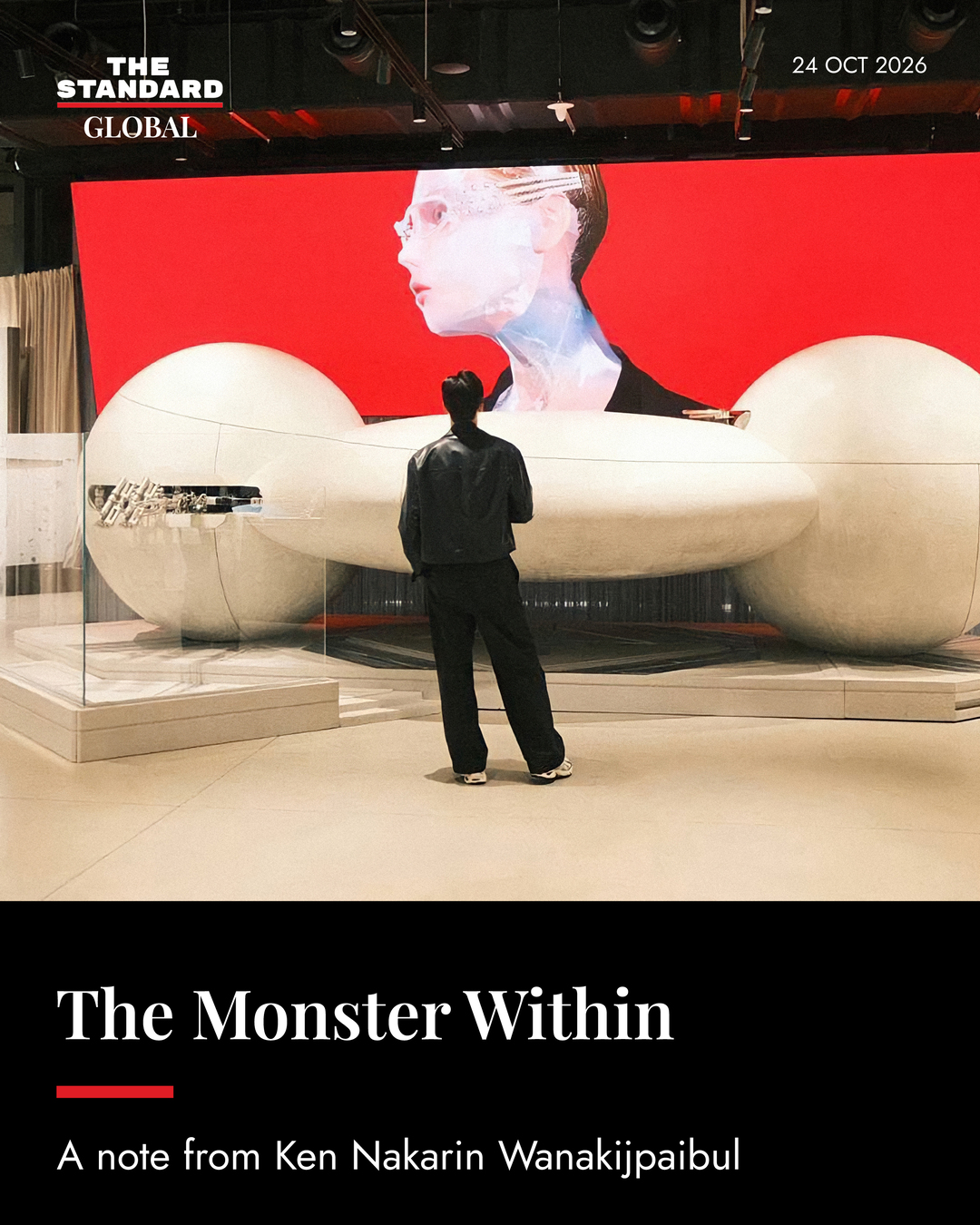
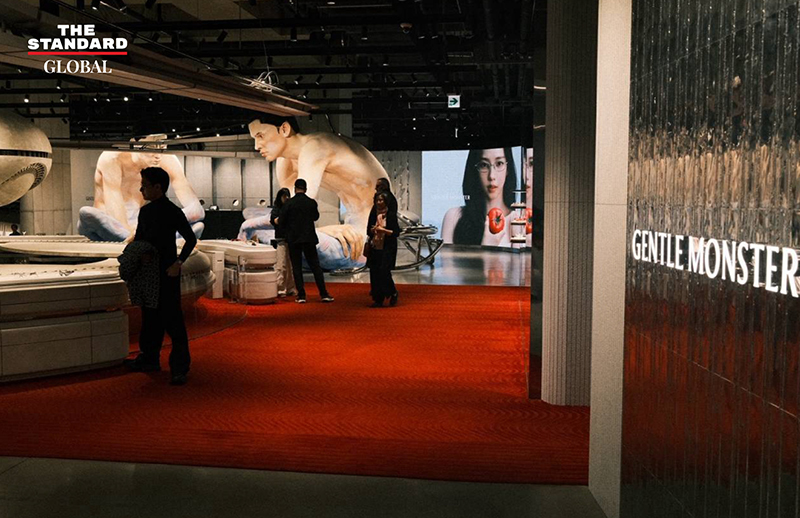
This idea was embodied in the very building we were at. HAUS NOWHERE SEOUL, with its protruding columns and jutting angles, stops you in your tracks. Giant sculptures and moving robots fill the space. The company even acquired a robotics business to power its in-house installation ambitions.
I don’t have the figures on how many glasses a robot can help sell, but it’s certainly an attraction. From an old boat in a showroom to robots in a futuristic building, the brand is still creating a reason to draw people in.
The term “monster” was starting to make more sense.
Everyone wants to be different. But how many are willing to pour this much time, money, and sheer effort into it?
I felt ambition radiating from the entrepreneurs throughout the trip, backed by systems, discipline, and a stubbornness to turn what they bullishly believe into reality. Success has fueled further ambition and convinced them to go even further.
Ambition can be seen across Asia. China is competing in frontier industries, Japan is searching for new growth engines, and Vietnam is racing to expand its manufacturing base. Meanwhile, in Thailand, where do we want to go, and how hard are we prepared to work?
Ambition has its costs: pressure, stress, competition. In Korea, the hunger fueled the relentless ambition.
The store doors opened at 11 a.m.; I saw streams of foreign visitors filing in, many holding up their phones to snap photos of the giant sculptures. The store has attracted people from around the world.
The executives smiled and bowed politely as they saw us off. On the way back, I thought about our earlier conversation.
Gentle on the outside, but the monster within remains hungry.
Ken Nakarin Wanakijpaibul
CEO and Editor-in-Chief, THE STANDARD