

Thailand’s Board of Investment (BOI) received a record 1.7 trillion baht in investment applications in the first nine months of 2026. Narit Therdsteerasukdi, the BOI’s secretary-general, says that is still “too little”. He argues Thailand could attract far more capital if it clears four structural bottlenecks.
Key Point
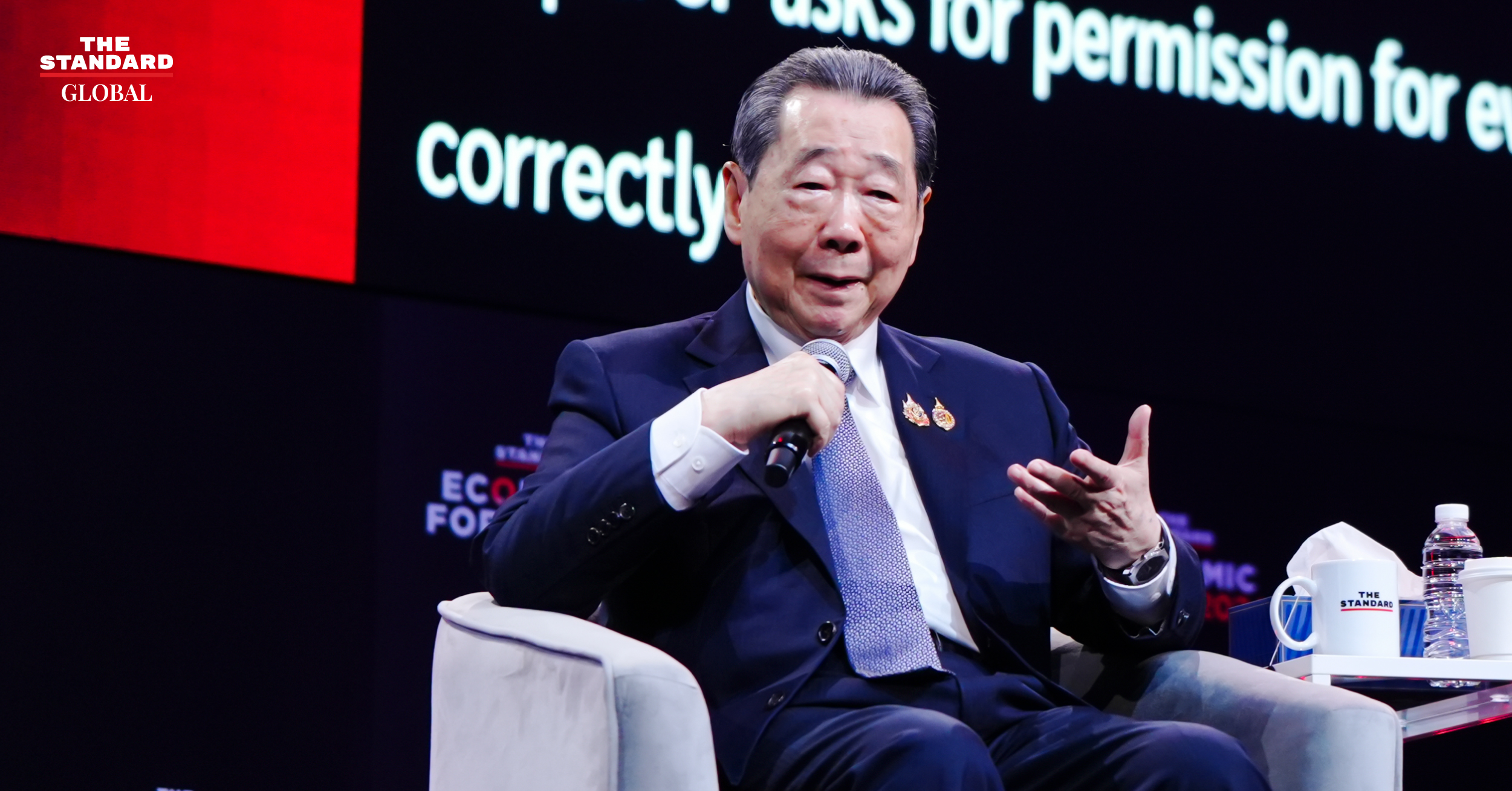
Speaking at THE STANDARD ECONOMIC FORUM 2026, Narit shared that whilst investment applications were the highest on record, a lot of work remains to fully leverage investment opportunities and create tangible value for the local economy.
The current challenge isn’t demand, as Geopolitical conflict and the shift to green technology have made ASEAN a global investment hub. Within the ecosystem, Thailand positions itself as a low-risk, neutral base with ready-to-use infrastructure. Meanwhile, widely acknowledged structural weaknesses remain the country’s key bottlenecks.
Investment pledges alone do not count for much. The government is now working toward three aims: turning pledges into quickly built projects, creating real economic value, and ensuring capital remains in the country.
“The goal is for investors to invest and stay for the long term.”
The Lag Between Capital And Benefit
Despite the trillions of baht in investment pledges and increased opportunities, the effect hasn’t quite trickled down to ordinary Thais and local businesses.
“This is a matter of timing,” said Narit. “Some benefits arrive at once, such as machinery purchases. Others may take years, such as the creation of new supply chains.”
Narit pointed to printed circuit boards (PCBs). Several plants are under construction and set to open next year, and they will require tens of thousands of workers, from engineers to circuit-design technicians. Data centers work the same way, as their arrival brings an advanced-technology supply chain.
The world’s largest maker of optical transceivers, for example, already employs more than 10,000 Thai workers at its Saraburi plant and plans to double that to 20,000 within a year.
Semiconductors and EVs: The Next Wave
Thailand’s national semiconductor strategy runs in three phases and focuses on three products: photonics, power electronics and sensors. The goal now is to build up domestic chip production and turn Thai firms that already design and test chips into regional leaders.
Meanwhile, EV policy is moving into a second phase.
The first phase focused on attracting investment and creating a viable market. The second phase now aims to limit imports and strengthen local manufacturing capabilities. We can already see this from the announcement of higher excise taxes on imported vehicles, a push for local content, and business-matching events that pair carmakers with Thai parts suppliers.
Meanwhile, Japanese automakers have also announced a new wave of investments in Thailand, valued at over 50 billion baht in hybrids and new-energy technology.
Addressing Bottlenecks
Looking ahead, Narit says that foreign investors prioritize speed above all else. Under the Thailand Fast Pass scheme, which shortens factory permitting, foreign firms aim to build a plant and start production within six months to a year. To fully leverage these opportunities, four key bottlenecks must be cleared.
- Ease of doing business: starting with permits
- Clean energy and grid capacity: for future-forward industries
- Skilled labor: train local workers fast enough to meet demand
- A complete domestic supply chain: to provide value across the local economy