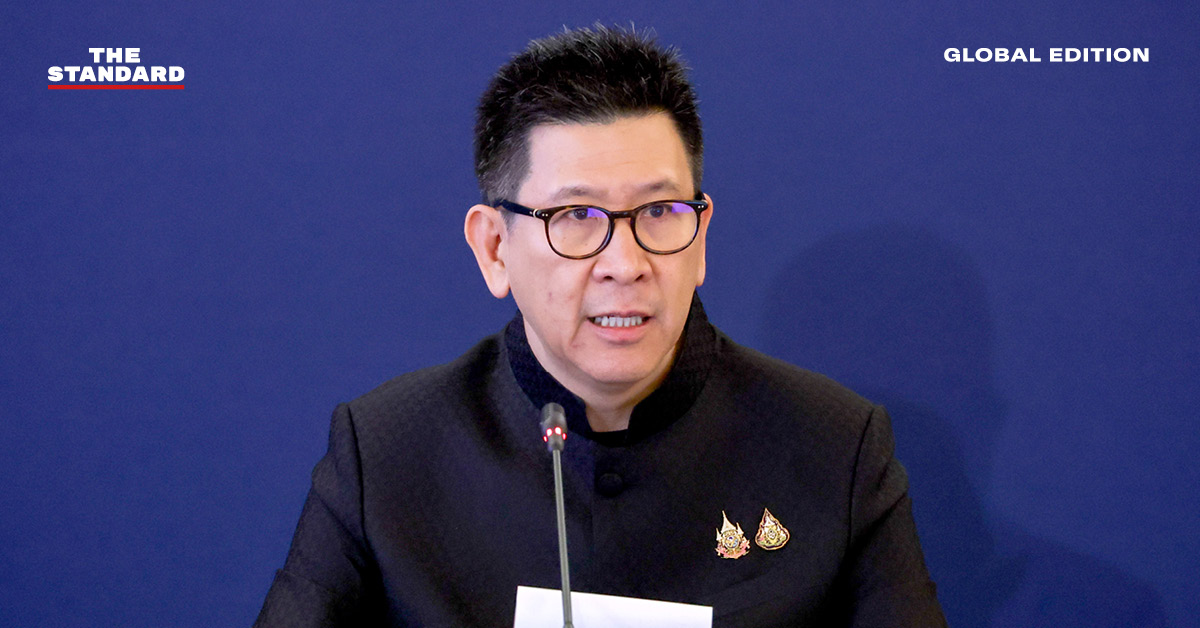
On 29 June, Deputy Prime Minister and Finance Minister Ekniti Nitithanprapas presented the 2027 budget bill to parliament, outlining plans to spend 3.79 trillion baht in fiscal 2027 and projecting a deficit.
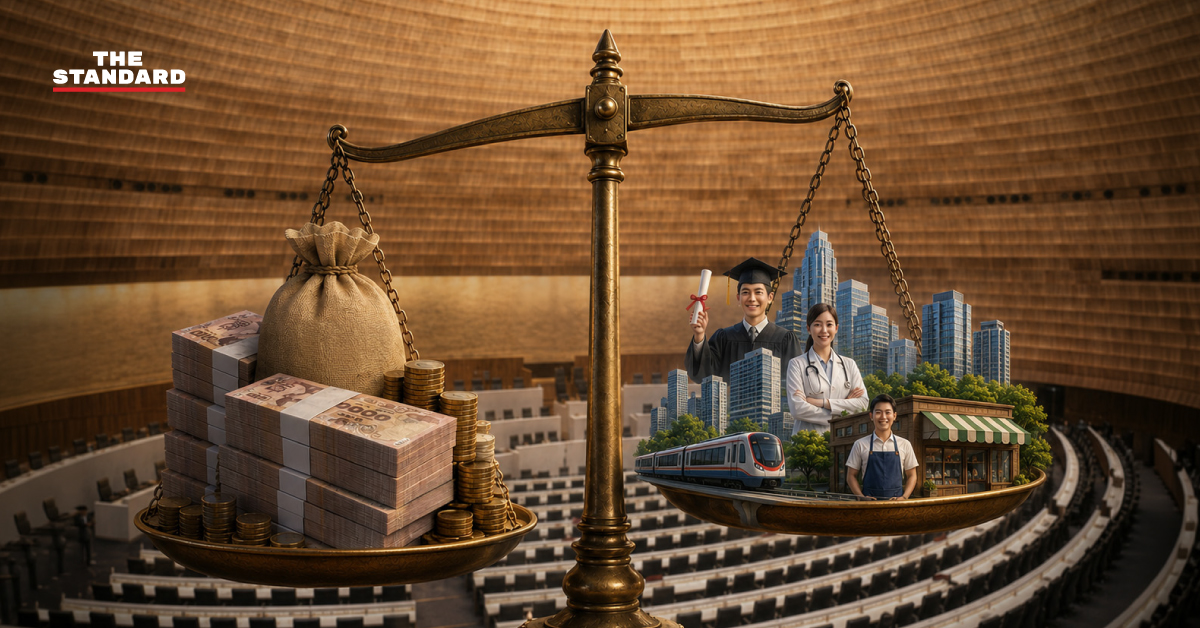
According to the presentation, recurring expenditure rose by up to 130 billion baht, while investment expenditure fell by 70 billion baht. Meanwhile, the public debt for the upcoming fiscal year is expected to rise to 69.36% of GDP, approaching the country’s 70% GDP ceiling.
Ekniti says that economic stimulation is necessary, with each slice of the budget precisely planned for Thailand’s current economic situation, noting the two crises of combatting energy prices and the high cost of living for citizens.
Ekniti says that Thailand’s GDP growth in 2027 is projected to expand by 1.7-2.7%, with a midpoint of 2.2%, driven by the recovery of the global economy and trade.
The opposition points to key details in the budget reading, most notably, investment expenditure, which is a crucial element for national development. This section’s budget is cut by approximately 70 billion baht, or 6.9% from the prior year, leaving the sum at just 20.8% of the total budget. In comparison, recurring expenditure, which covers public sector personnel costs and social welfare, continues to rise, accounting for almost 74% of the total budget.
Sirikanya Tansakun, Deputy Leader of the People’s Party, called out the government’s use of Artificial Intelligence as the ‘new ATM PIN code of 2027,’ citing large budget allocations towards any project with AI attached, with the Ministry of Digital Economy seeing a 30% increase in budget allocation to 13.6 billion baht.
Meanwhile, Democrat Party Leader Abhisit Vejjajiva says the 2027 fiscal budget points to Thailand’s long-standing structural challenges, and that budget allocations are only sufficient to cover recurring expenditure and debt repayment, whilst investment spending comes from the budget deficit, which relies on borrowed funds.
Thakoon Chulintorn, Director of the Parliamentary Budget Office (PBO), spoke at an academic seminar analyzing the draft Annual Budget Expenditure Act for fiscal year 2027, stating that the FY2027 budget act is one where ‘results are difficult to expect,’ due to the drop in investment spending
“Investment expenditure is the heart of the budget. The direction the country develops in depends on investment spending. The lower the investment expenditure, the harder it becomes for the country to grow or develop,” Thakoon said.
The Key Takeaway
The 0.2% expansion in the 2027 fiscal budget tells a bigger story. Take inflation into account, and the inflation-adjusted budget is actually shrinking. Whilst the government’s recurring expenses cannot be adjusted, the comparison with the reduced investment budget highlights various structural flaws and suggests that the road to Thailand’s economic expansion will be long, despite increased resources being poured into ‘AI’-related projects.
Investment expenditure is the vehicle for Thailand’s growth, a narrative that has been prevalent across the government’s rhetoric since the election. Taking into account geopolitical tensions and a more challenging global backdrop, Thailand currently faces both inward and outward challenges, including combating a domestic slowdown spurred by weak domestic spending and the decline of anchor industries such as automotive manufacturing. Ambitious projects, from national energy reform to facilitating digital upskilling, require significant investment to raise productivity and potential, separate from spending to sustain current operations.
Thailand’s own 2027 growth forecast of 1.7-2.7% (midpoint 2.2%) is modest and relies on export recovery and improved global trade conditions. Given the country’s regional ambition to compete with neighbors such as Vietnam and Indonesia in areas like digital infrastructure, logistics, and manufacturing, it will be challenging to achieve this under the current outlook. There is a gap between ambitious government rhetoric and the real tangible figures that communicate the reality of Thailand’s fiscal responsibilities.
THE STANDARD Global Edition is produced in collaboration with Bitesize Bangkok